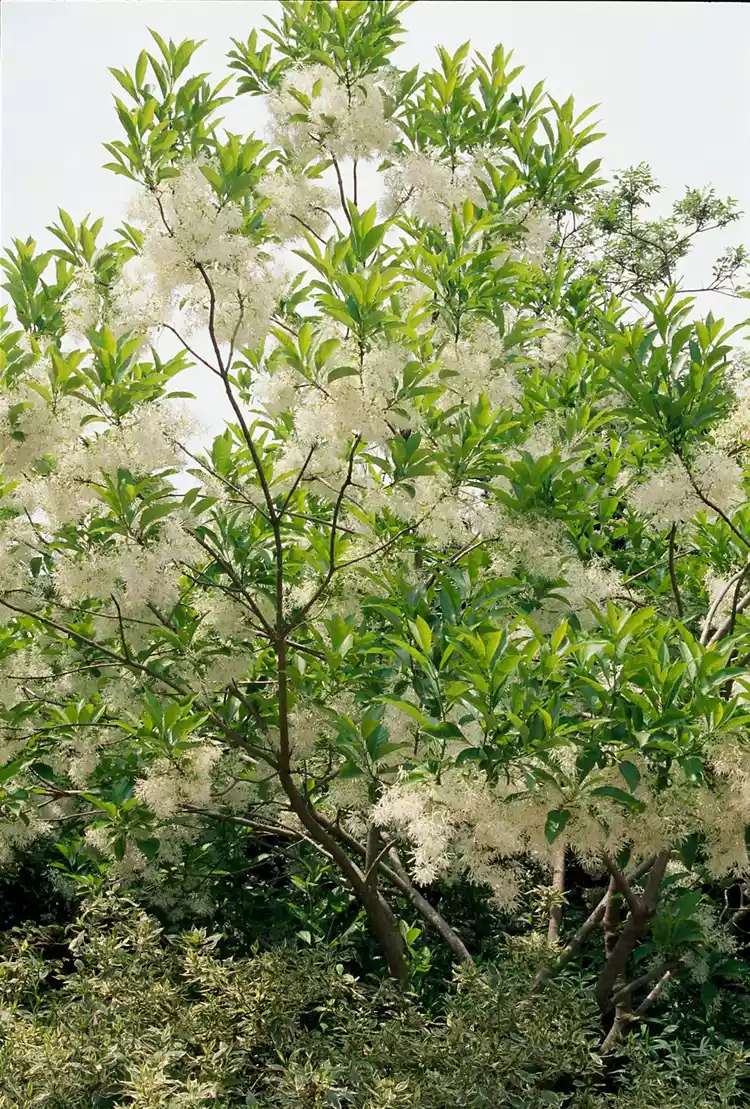
Grown as a large shrub or small tree, the white fringe tree (Chionanthus virginicus) is a North American native with loads of lacey white flowers in spring and a sweet lilac-like fragrance that hangs in the air, wafting throughout the garden. White fringe tree gets about 20 feet tall and wide, making it a great choice for smaller landscapes and gardens with limited space. However, you’re more likely to see this elegant woody plant in the wild or botanical gardens than in your neighborhood. Grow your own white fringe tree with the tips in this guide.
White Fringe Tree Overview
| Genus Name | Chionanthus |
| Common Name | White Fringe Tree |
| Additional Common Names | Old Man's Beard, Snowflower Tree, Greybeard Tree |
| Plant Type | Shrub, Tree |
| Light | Part Sun, Sun |
| Height | 20 to 30 feet |
| Width | 15 to 20 feet |
| Flower Color | White |
| Foliage Color | Blue/Green |
| Season Features | Spring Bloom |
| Special Features | Fragrance |
| Zones | 3, 4, 5, 6, 7, 8, 9 |
| Propagation | Seed |
Where to Plant White Fringe Tree
White fringe trees can be used as single specimen trees or grouped to create large borders. These natives prefer loamy soil with plenty of moisture and do exceptionally well in wet areas along waterways or near ponds. These plants are hardy in USDA Zones 3-9, but some sheltering from temperature extremes in especially cold or hot areas is beneficial.
Be cautious when planting white fringe trees adjacent to other larger trees. Root competition in heavily planted areas can harm the white fringe tree’s growth; avoid planting it among the roots of other trees or large shrubs.
How and When to Plant White Fringe Tree
As with most nursery-grown trees and shrubs, planting at the beginning of the growing season is usually best, but white fringe trees can also be planted in the fall due to their cold tolerance.
When planting a nursery-grown white fringe tree, dig a hole in well-draining soil as deep as the root ball and two to three times as wide. Place the tree in the hole and backfill it with the soil removed from the hole. Water thoroughly, pressing down on the soil to remove any air pockets.
Planting white fringe trees from seed is a process that can take up to two years for seeds to sprout even under ideal conditions. For best results, follow these steps:
- Soak clean seeds in water for 24 hours.
- Put the soaked seeds in moist fibrous sphagnum moss in a sealable plastic bag and put it in a refrigerator for at least three months for cold stratification. Check the moss every few weeks and re-moisten if needed.
- After three months, remove the seeds from the moss and put them 1/2-inch deep in moistened seed starter mix. Keep the soil evenly moist and under bright light. For additional heat and appropriate light levels, use horticultural heating mats and artificial lighting. Although some seeds may sprout the first year, it is likely that most of them won't; they require a second stratification. After two or three months, remove any seedlings that begin to grow when their third set of leaves have grown in, potting them in small pots with well-draining soil. Place the ungerminated seeds in the fridge for another six months, keeping the soil moist throughout the process. Alternatively, leave seed trays outdoors over the following winter for natural cold-weather stratification. Protect seeds left outdoors from rodents and birds by covering them with wire or mesh.
- Repot seedlings in containers one size larger as they begin to outgrow their previous containers, and provide monthly doses of half-strength fertilizer for optimal growth. When a seedling reaches about 12 inches tall, transplant it to its permanent location.
White Fringe Tree Care Tips
Care requirements include the appropriate lighting, soil preferences, watering schedule, and pest management to ensure a white fringe tree flourishes in your yard.
Light
White fringe trees prefer full sun to part shade, making them ideal for planting in urban lots. They will grow in part shade, but the flower production is minimal.
Soil and Water
White fringe trees do best in evenly moist soils and can be planted along waterways, but they can also tolerate drier conditions along hillsides. They prefer loamy, fertile soils with good drainage. In the wild, they can often be found on rocky ridges. Keep newly established plants well-watered, especially in hotter regions.
Temperature and Humidity
White fringe trees can handle a wide variety of climates, from exceedingly cold to hot in Zones 3-9. These plants thrive in the humid conditions of the South and Midwest.
Fertilizer
Native to the eastern portions of North America, white fringe trees are adapted to native soils and do not require additional fertilizer. However, in areas with nutrient-depleted soils, such as long-established lawns, fertilizer spikes can be beneficial. Follow the product instructions.
Pruning
Pruning white fringe trees in their shrub form is not usually necessary other than to clean up broken or dead branches, but pruning the tree form can be necessary to maintain the upright, clean trunk or trunks.
Pests and Problems
White fringe trees have few significant issues, but recent evidence suggests they are susceptible to emerald ash borers. Treatment for ash borers requires systemic controls and should be administered by an arborist or horticulture professional.
How to Propagate White Fringe Tree
Both male and female plants are needed for pollination and fruit production. Harvesting seed from the fruit of an established tree is the best way to propagate white fringe trees. It doesn't reproduce well by stem cuttings.
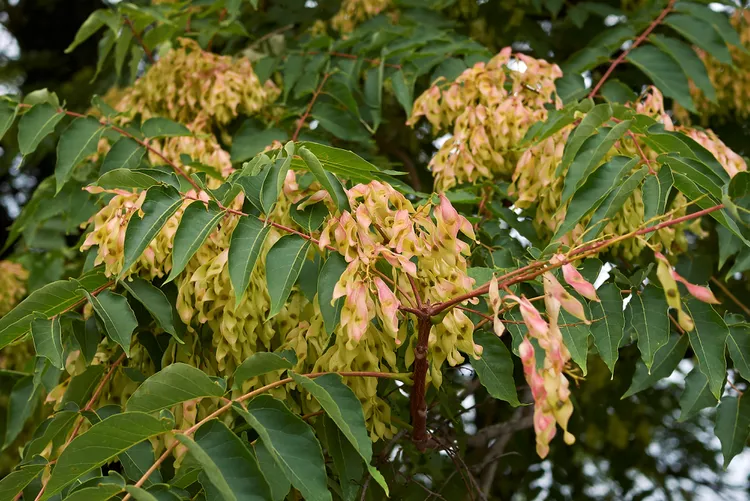
Harvest the fruit of the female tree when it turns purple in July to September. Clean the fruit pulp from the seeds and plant them outdoors in the fall, 1/2 inch deep, in a prepared bed of well-draining soil. Winter will supply the necessary cold stratification. Mark the seedbed, as the seeds won't germinate the following spring but rather the spring after that.
Types of White Fringe Tree
Only two species of white fringe tree are available in North America: the native Chionanthus virginicus, described in this article, and Chionanthus retusus, the Chinese fringe tree, which differs only slightly from C. virginicus.
White Fringe Tree Companion Plants
White fringe trees grow well among most other garden plants. Because of their smaller size and ability to handle partially sunny conditions, they make excellent border plants and look especially good planted along the edges of forested land.
New