
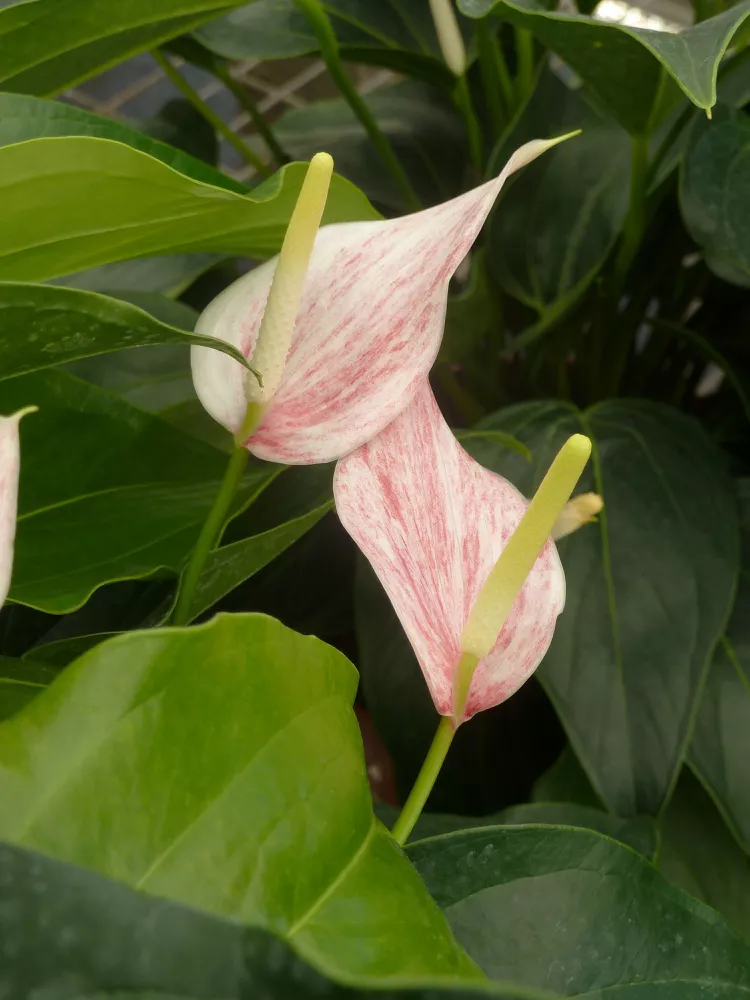
Add color and a tropical touch to a room by growing anthurium. This easy-to-grow houseplant produces brightly colored flower-like leaves in shades of pink, red, purple, and white. Technically called a spathe, these colorful leaves are shiny and last 6 weeks or more on the plant. Each spathe is punctuated by a cylindrical flower spike called a spadix. Long-lasting dark green foliage is the perfect backdrop for the showy anthurium flowers. Its reliable color will add pizzazz to any plant collection.
Flamingo Flower Overview
| Genus Name | Anthurium |
| Common Name | Flamingo Flower |
| Additional Common Names | Flamingo Lily, Tail Flower |
| Plant Type | Houseplant |
| Light | Part Sun, Shade |
| Height | 2 to 3 feet |
| Width | 6 to 12 inches |
| Flower Color | Pink, Purple, Red, White |
| Foliage Color | Blue/Green |
| Zones | 10, 11 |
| Propagation | Division, Stem Cuttings |
Where to Grow Anthuriums
In tropical regions, anthuriums can grow outdoors. These plants do not tolerate frost and is best reserved for Hardiness Zones 10 or higher. Enjoy anthurium as a houseplant in all other locations, using it as a centerpiece on a tabletop or as a focal point in a collection of favorite houseplants.
Place anthurium houseplants near an east-facing window where they can get plenty of bright, indirect light. They will also grow well near a south- or west-facing window, provided they are kept out of direct sunlight. If direct sunlight may hit the plant for part of the day, cover the window with a sheer curtain to diffuse the light. Anthuriums love humidity so a bright bathroom is a great location for your plant.
In tropical regions, anthuriums grow outside in shade. Give them a site with moist, well-drained soil that is enriched with organic matter. Avoid locations that are wet or boggy.
Anthurium contains chemicals that are mildly toxic to cats and dogs if ingested.
Anthurium Care Tips
Light
Grow anthuriums in medium to bright, indirect light in an east-facing window or in a spot protected from direct sunlight near a south- or west-facing window. Anthuriums need consistent light to bloom well. If your plant is not blooming, move it to a location with more light. But keep anthuriums out of direct sunlight because their leaves will easily burn.
Soil and Water
Anthurium grows best in moist, well-drained soil that is rich in organic matter. For potted indoor plants, give them a houseplant potting mix.
Water anthurium plants as needed to maintain soil that is moist but not wet. The surface of the soil should feel slightly moist to the touch. Water plants deeply when soil begins to dry out. If the plant is in a saucer, empty excess water in the reservoir shortly after watering to ensure soil doesn’t become waterlogged.
Temperature and Humidity
Warm temperatures and high humidity are best for anthurium. Plants thrive in normal household temperatures between 65 and 80°F. Protect anthurium from drafty spaces; don’t place them near frequently used exterior doors.
Bump up the humidity around anthurium by placing the plant pot on top of a shallow tray filled with pebbles and water. The water will slowly evaporate, increasing the humidity around the plant. Group several houseplants together to increase humidity as well. You can also place a humidifier nearby.
Fertilizer
Anthuriums are not particular about fertilizer, and often grow and flower well without extra feeding. If your plant is not blooming well and its light needs are met, fertilize it with a general-purpose houseplant fertilizer. Follow package directions for use.
Potting and Repotting Anthurium
Repot anthurium anytime of the year. When increasing pot size, choose a container that is just a couple inches larger than the plant’s previous pot. Water the plant deeply after repotting and fertilize with a general-purpose fertilizer.
How to Propagate Anthurium
The easiest way to make more anthuriums is by dividing your plant. Take the plant out of the pot and gently tease apart the roots to divide the plant in half. Repot each division and water the newly potted plants well. The divisions will root into the surrounding soil in 4 weeks or so.
Types of Anthurium
In addition to anthuriums with colorful flower-like leaves, there are a few members of the anthurium species that are well-known for their eye-catching dark green leaves.
Anthurium 'Candy Stripe'
Streaks of pink and white give the spathes of 'Candy Stripe' an eye-catching two-tone look.
Anthurium andraeanum
Many varieties and hybrids of this species exist and are often grown for the cut flower industry. It bears large, colorful spathes above green, heart-shaped foliage. The plants get about 20 inches tall.
Anthurium andreanum 'White Heart'
White blooms and large green, heart-shape leaves distinguish this elegant anthurium variety.
Anthurium magnificum
This species has dark green leaves with contrasting bright white veins. The huge leaves have a leathery appearance with age. The plant grows about 2 feet tall and wide.
Anthurium radicans x dressleri
This rare anthurium hybrid is prized by collectors. Bred at the Marie Selby Botanical Gardens in Florida, it has the large leaf size of its A. dressleri parent, and the pronounced veins that give the whole leaf an interesting texture from its A. radicans parent. The flowers are not very showy.
What to Grow with Anthurium
Other easy-care houseplants that thrive in bright light and humidity like anthurium include aglaonema and nerve plant.