Appellate Court Deems Trump's Tariffs Unlawful, Delays Enforcement
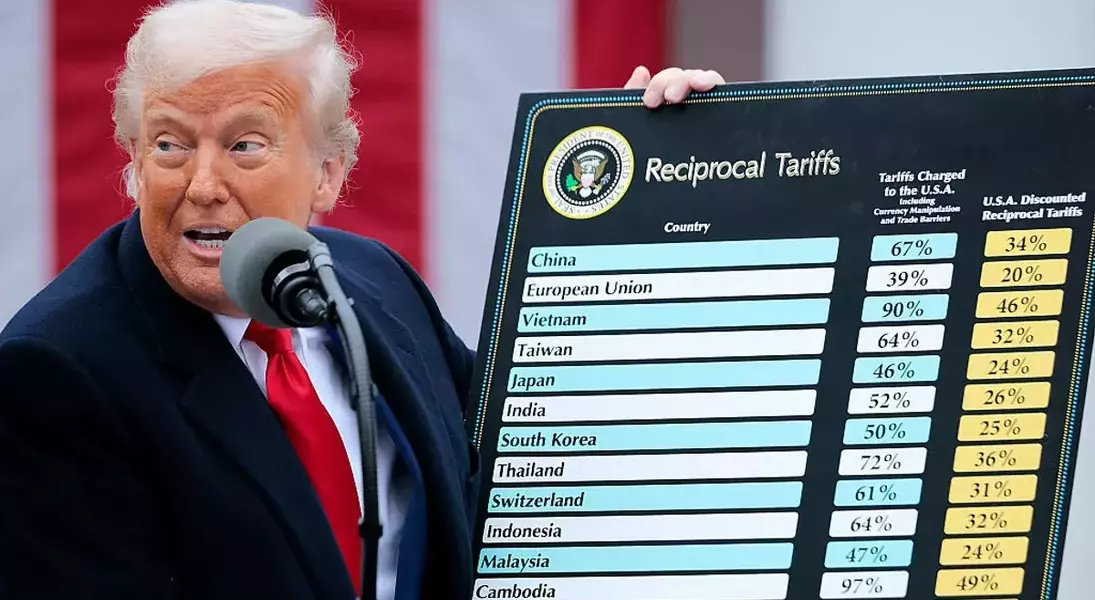
A recent federal appeals court decision has cast a shadow over former President Donald Trump's use of emergency powers to impose widespread tariffs. The court concluded that these trade measures, affecting global commerce on an unprecedented scale, lacked proper legal authorization under the International Emergency Economic Powers Act (IEEPA). This significant ruling, issued on August 29, 2025, has the potential to reshape future presidential trade policies. However, the immediate impact of the decision is deferred, as the court has provided a window until mid-October for the administration to pursue an appeal to the Supreme Court, signaling a potential high-stakes legal showdown concerning executive authority and international trade.
The Court of Appeals for the Federal Circuit, in a 7-4 split decision, affirmed an earlier finding by the Court of International Trade. Both judicial bodies concurred that the previous administration overstepped its bounds by enacting tariffs of indefinite duration on a vast array of goods from nearly every nation. The core of their argument rested on the belief that Congress did not intend for the IEEPA to grant a president such expansive and unchecked power over trade. The appellate court's written opinion explicitly stated that the statute does not mention tariffs or any of their synonyms and lacks the procedural safeguards necessary to limit a president's authority in this domain. This interpretation underscores a crucial separation of powers issue, highlighting that the constitutional prerogative to set long-term tariffs primarily rests with the legislative branch.
Despite the definitive ruling, the appellate court temporarily suspended the mandate to invalidate these tariffs until October 14. This strategic delay serves to accommodate a potential request for Supreme Court review from the current administration. Legal experts, such as Michael Lowell, a partner at Reed Smith, acknowledge the unpredictability of a Supreme Court ruling on this matter. He pointed out that the dissenting appellate judges' arguments, which claimed the tariffs were constitutional due to Congress's inaction in challenging national security justifications, seem to target the high court's conservative justices. These dissenting views suggest a broader interpretation of presidential emergency powers in foreign affairs, contrasting sharply with the majority's focus on congressional authority over trade.
The implications of this legal challenge are substantial, affecting trillions of dollars in global trade that have been subject to these tariffs since the beginning of the year. Should the Supreme Court uphold the appellate decision, the administration could face the formidable task of processing refunds for accumulated duties, potentially disrupting current trade policies. The appellate court's decision specifically targets what it termed 'Trafficking Tariffs' imposed on countries like Mexico, China, and Canada, as well as 'Reciprocal Tariffs' that levied additional duties on almost every nation worldwide. The court clarified that its ruling was not about the policy merits of the tariffs but solely about their legal authorization under the IEEPA, emphasizing that such widespread and indefinite trade measures fall outside the scope of the act.
In light of this legal uncertainty, advisors like Lowell are urging affected businesses to prepare for a scenario where the Supreme Court might affirm the lower court's ruling. This preparation involves meticulously maintaining records of imports and tariffs paid. Many companies, often relying on brokers for such documentation, may find themselves unprepared. However, having readily accessible records could streamline the process of recovering overpaid tariffs through post-shipment corrections, preventing potential delays and complications within customs systems. This proactive approach is crucial, as the final judicial word on this matter could have profound and lasting effects on international trade practices and presidential authority.