
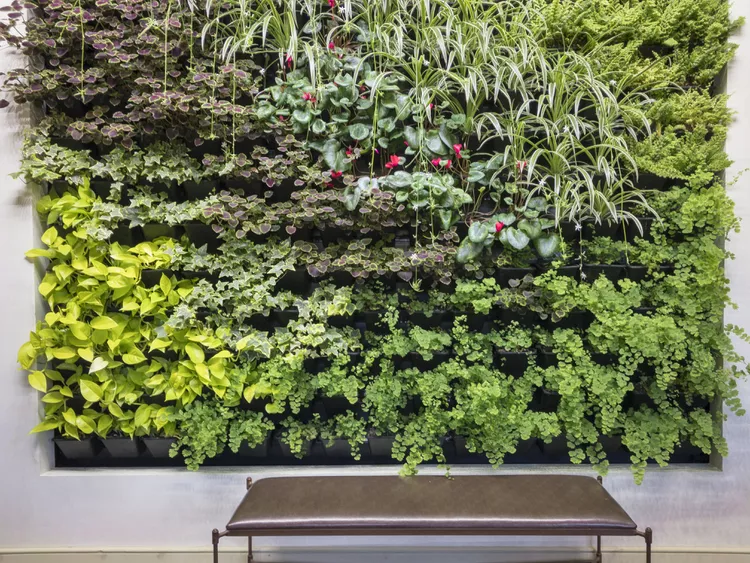
There’s no denying that houseplants have been having a moment—a years-long one. Between the rise of biophilic design and the return of the ’70s-style indoor jungle aesthetic, the desire to bring even a tiny piece of nature indoors has never been stronger. Enter the internet’s newest houseplant trend: living walls. A truly unique way to blend nature and interior decor, living walls introduce living art into the home.
You may be most familiar with these types of displays as outdoor installations or in commercial spaces like hotels and restaurants, but over the past couple of years, the trend has become increasingly popular in residential spaces, as well. While these green displays look complicated and hard to achieve, they are actually relatively simple to install and maintain. Here’s everything you need to know about trying a living wall in your home.
What Is a Living Wall?
Living walls—also called plant walls, vertical gardens, and green walls—are vertical installations of plants on a wall or other type of structure. The plants are often positioned close together to form a cohesive display of greenery. Usually, the plants are planted in a growing medium that is hidden from view and watered through some type of irrigation system, particularly with large living walls.
Benefits of Living Walls
As with all houseplants, installing a living wall in your home can benefit your physical and mental well-being. Plants have been shown to increase productivity, make us happier, and purify the air, among other benefits. For those with limited space, installing a living wall is also a great way to integrate plants into the home without taking up valuable floor or shelf space. All you need is a blank wall!
Beyond just their many benefits, living walls are also absolutely gorgeous. Living walls take displaying houseplants to a new level, combining art and nature in a truly unique way that will make a big statement in your home.
Types of Living Walls to Try at Home
There are a few different ways that you can try a living wall in your home. Here are some of the most common options.
Panel Systems
Panel systems utilize some kind of solid structure to secure plants to the wall. You can purchase panel systems online from experts who specialize in installing green walls, but they can get expensive quickly. As an alternative, you can also DIY a panel system at home pretty easily using a standard wooden pallet and stapling fabric between each of the slats to hold the plants in. There are plenty of tutorials online that will walk you through the process.
Felt Systems
This option is typically used for smaller-scale installations, making it perfect for residential projects. Felt living wall systems utilize a felt hanger that looks very similar to over-the-door fabric shoe organizers. Individual plants are planted with soil in every pocket and the entire system is secured to the wall. These felt living wall hangers can be purchased online from various venders and are relatively affordable.
Trellis Systems
Trellis systems are used to create a cohesive green wall effect with vining or trailing houseplants. Usually the plants are potted at the bottom of the wall and the vines are encouraged to grow upward through the trellis, resulting in a lush living wall. This option is a bit lower-maintenance than some of the other options because fewer plants are required to build the wall, and once the plants start climbing the trellises on their own, very little maintenance is required (other than some occasional pruning) to keep the wall looking nice.
Container Systems
One of the most practical options for those looking to install a living wall in a residential space is a container system. Container systems utilize individual pots that are attached to the wall using some kind of anchor, such as a bar, hooks, or even shelves. The trick to making these living walls look cohesive is ensuring the plants are installed close together with plenty of vining or bushy plants to hide the pots below. Container systems can also be easily DIYed. For example, pots can be hung from standard towel rods, attached to peg boards, or hung from wire wall grid displays. The possibilities are truly endless!
What to Know Before Trying This Green Trend
Prevent Long-Term Damage
The most important thing to know if you are considering a living wall for your home is that installing the wall properly is incredibly important. The last thing you want is moisture from the plants causing long-term damage to your walls, so it’s crucial that you ensure that the setup is watertight. Whether this means you put plastic sheeting between the wall and the plants or each plant is potted in a watertight container, take time in this first step to prevent damage in the future.
Choose Plants Carefully
Choosing the proper plants for your space is critical in ensuring the longevity of your living wall. After all, it wouldn’t be a living wall if all the plants end up dying. Most of the time, it is a good idea to group similar kinds of plants together and consider the lighting available in your space. For example, if the wall you are hoping to install the plants on receives medium to low light, you should only choose plants that can survive in this type of environment, while also ensuring that all the plants on the wall have similar watering needs. Similarly, if your wall receives lots of intense, direct sunlight, pick your plants accordingly. Keep in mind that you can also add grow lights to your setup if the wall doesn’t receive any natural light.