
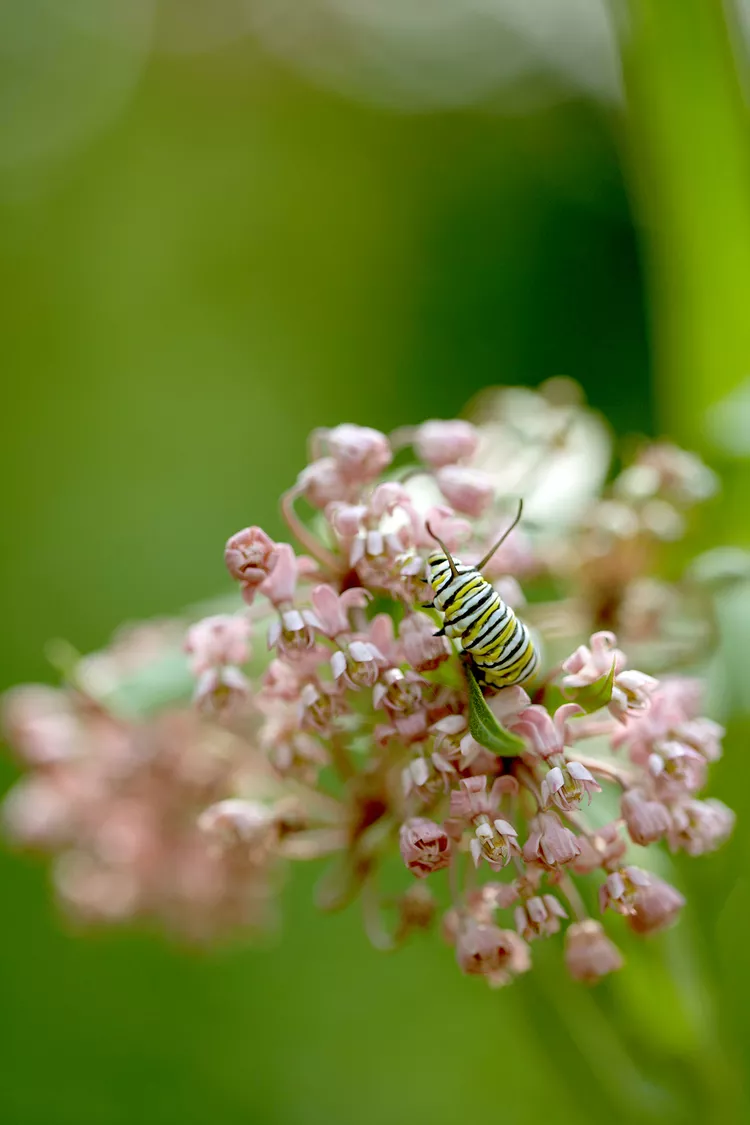
It's no secret that filling your garden with pollinator-friendly plants will encourage an array of beautiful—and beneficial—winged guests to visit. But have you considered how to attract monarch butterflies specifically? During the summer, it's always a thrill to see these orange-and-black insects flitting around your flowers and fueling up on nectar. It can be even more exciting to watch their tiny caterpillars hatch on milkweed and grow a little larger every day, until they make their green-and-gold cocoons. If you're extra lucky, you just might witness the adult butterfly emerging a couple of weeks later, then taking its first flight. Make your garden a more welcoming haven for monarchs with these seven tips.
1. Make Milkweed Your Focus
What flowers do monarch butterflies like best? The answer is easy: milkweed. Planting this hardy perennial is the best thing the average gardener can do to help monarchs. It is the most essential component of a healthy monarch habitat—the butterflies lay their eggs on milkweed, and it's the only thing monarch caterpillars eat. Look for plants in the Asclepias family (such as Asclepias syriaca, Asclepias speciosa, Asclepias incarnata, or Asclepias curassavica, depending on the region where you live). Native species of milkweed are always preferable—you want to replicate the environment monarchs would naturally seek out as they migrate through your area. Purchase your plants from a reputable grower who doesn't use commercial pesticides or fertilizers, or start them from seed yourself.
2. Keep Your Monarch Garden Chemical-Free
It's no secret that the widespread use of insecticides and herbicides has contributed to the decline of the monarch population (as well as critically endangering other important pollinators). Many pesticides are non-discriminatory, meaning that when you spray them to kill one type of insect, you wipe out any that come in contact with the chemical, including beneficial insects. Butterflies are especially susceptible, so it's crucial to avoid the use of any toxins in your monarch habitat. Instead, use organic pest- and weed-control methods that won't harm pollinators.
3. Plant Nectar-Rich Food Sources
While the caterpillars devour the entire milkweed plant, the adult monarchs only drink the nectar from the flowers. Which means these grown-up butterflies need more to feed on. Fill your garden with as many nectar-rich flowering species as possible, planning for early, middle, and late bloom times to ensure there is a constant supply of food. This will help attract monarchs flitting about in search of sustenance, as well as a range of other butterflies, birds, and pollinators. Some plants that provide plenty of nectar include: joe pye weed, lantana, liatris, echinacea, flowering sages, verbena, buddleja, bee balm, black-eyed susans, and yarrow. And, of course, milkweed.
4. Grow Colorful Native Plants
While many ornamental flowering species are fantastic for attracting monarchs (and other pollinators), you should aim to include as many native plants as possible. Monarchs require a diverse food supply, not only during the spring and summer when they're breeding, but also in the fall when they're migrating. Native plant species are perfectly adapted to provide a succession of timely, nectar-rich blossoms from spring to fall, making them a critical component for any butterfly garden. Bonus: Plants that naturally thrive in your area will require almost no maintenance to survive, since they've been growing in your environment long before you came along.
Fill your garden with a rainbow of colorful blooms, too. Resist the urge to evenly diffuse colors throughout your design scheme, as beautiful as this arrangement may be. Instead, group your plantings to form large drifts of solid color. This gives butterflies—especially those tired migrating monarchs—and other beneficial insects an easy visual target and places a multitude of nectar-filled blooms in easy reach.
5. Provide Water and Mineral Sources
Butterflies (especially males) often obtain extra moisture and essential minerals through a behavior known as puddling. They locate damp surfaces, such as soil, sand, rocks, or decomposing material (wet from dew, rain, or irrigation), and suck the liquid from it. (This is especially common during periods of drought and high heat.) Unfortunately, a pond or fountain isn't quite what your winged friends need—they require dampness, rather than standing, deep water. Even a puddle is probably too deep; you will only find butterflies hydrating around the edges of it.
If your garden doesn't naturally include shallow wet spots, you can easily create a butterfly puddling pool by filling a shallow dish with garden soil and/or low, small rocks. Place it somewhere that gets full sun near your nectar plants, and replenish it with fresh water every day (or set it up where it will receive a bit of daily moisture from a drip system). Add minerals periodically by sprinkling salt, compost, or small pieces of decomposing fruit on top.
6. Rock On
Butterflies are cold-blooded (like all insects), so they rely on the warmth of the sun to maintain their body temperature. This is why they're only active during the warmest parts of the day. Placing flat, smooth rocks and other heat-retaining materials in sunny parts of your garden will give them a warm place to rest and recharge. Additionally, damp rock surfaces provide a place for butterflies to puddle and draw out essential minerals while simultaneously warming themselves.
7. Give Monarchs Shelter and Protection
Surround your monarch habitat with protective plants to shield butterflies from wild weather. Trees, shrubs, and vines with strong, woody stems and dense foliage work well for this, as long as they are sturdy enough to shelter butterflies during a storm. This also just happens to be the sort of plant that's ideal for monarch caterpillars to pupate on—they'll roam sometimes as far as 40 feet from their host milkweed searching for a secure place to build their chrysalis. You'll stumble across these gold-flecked, bright green beauties in the most random places, like under the eaves of roofs, beneath hanging pots, tree branches, or flower stalks, and along trellises. They turn clear just as the butterfly is about to hatch—you can see the dark butterfly coiled inside!
Always be on the lookout when you're relocating plants or structures in your yard or clearing brush and fallen branches. If you find a chrysalis that's exposed or in danger of being damaged, gently relocate it. Many monarch lovers will collect chrysalises and relocate them to contained monarch habitat kits to let them develop and hatch in fully-protected peace.