
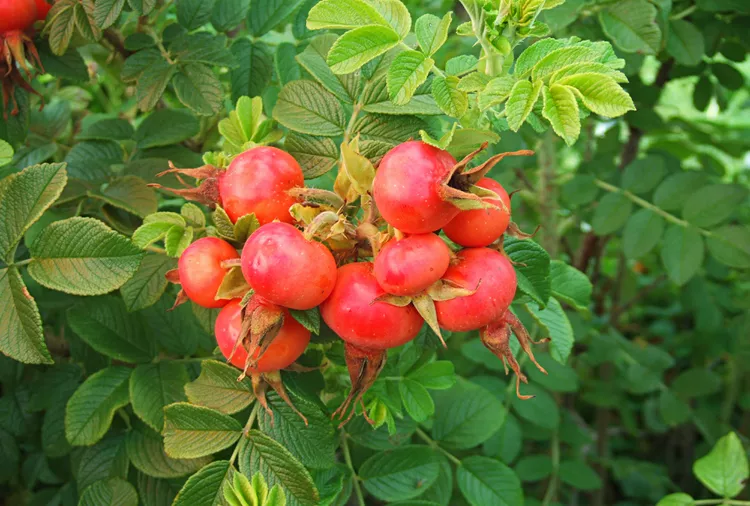
Flowers are the main attraction of roses, of course, but certain varieties also produce showy fruit. So what are rose hips exactly and what can you do with them? These hips can do triple duty: they add a splash of color when there aren’t any flowers; they're a vitamin-C packed superfood that can add a surprisingly sophisticated flourish to recipes; and they make pretty additions to fall and winter decorations. Here's what you need to know to enjoy all these perks, including tips for choosing the best varieties for rose hips, harvesting, and using rose hips for eating or decorating.
Rose Hips Benefits in the Garden
Rose varieties that set dense clusters of hips put on a colorful display almost all year between the flowers and fruit. The best of them are as attractive and festive in winter as pyracantha, beautyberry, or persimmon. As an extra visual bonus, hips attract colorful birds like cardinals and bluebirds. When you have roses with fruit, the only challenge is deciding how much to leave on the plant for show and how much to bring in to eat or use in arrangements.
Tips for Growing Rose Hips
- Select types of roses carefully to get the look you want. Hips vary almost as much between different roses as the flowers or growth habit. Most are round and range from orange to bright red, but some are shaped like soda bottles or figs and may be a deeper red or black. The biggest general difference between varieties will be in the size of the fruit and the density of the clusters.
- Hips add the most appeal in spots where you can easily see them. So use hippy shrub roses as foundation plantings and front yard hedges. Place climbing varieties with showy rose hips on walls or arbors that can be seen from multiple angles. If you put up wreaths or other outdoor decorations in fall or winter, try to place your roses where the hips will complement them.
- Some roses bloom once a year while others bloom several times from spring through fall. Once-bloomers and repeat-bloomers need to be treated differently when it comes to deadheading or pruning your roses. Avoid pruning or deadheading once-bloomers after they bloom in spring or early summer, except to remove dead wood, or you won’t get hips. On the other hand, most repeating roses should be deadheaded or lightly to moderately pruned each time they flower to encourage heavier repeat bloom until September. If you let them grow hips before then, they may not bloom much more. After the early fall bloom, don’t deadhead or prune. Let hips develop for winter.
Never apply toxic pesticides to roses that will produce hips (or flowers) that you may consume. That includes common sprays and systemic treatments sold for roses. If your rose needs to be treated for pests, only use sprays sold for edible fruits and vegetables and follow the instructions on the label.
Using Rose Hips for Decorating
Like holly, pomegranates, and peppermint candies, rose hips are mostly red, round, and look cheery in fall and winter decor. Dense sprays of small hips like those from the Single Musk Rose, Red Leaf Rose, or Rosa multiflora give a light, impressionistic flourish of red flecks. Larger hips can make strong focal points or even be the main component of a fall wreath or vase arrangement.
Clip rose hips off several inches down the stem to leave enough to work into the wreath form or to the bottom of your vase. Hips will stay plump in the cold or in water for several days, but will dry out quickly otherwise once you’ve removed them from the plant. They look rustic when dried out, but if you prefer a fresh look for longer, you can mist them daily or seal them with wax or another fixative.
Harvesting Rose Hips for Eating
Some rose hips can be eaten green, when they have more of a bell pepper mouthfeel and a more tart flavor. For most hips, it's better to harvest them once they reach their mature color. Some people prefer to let them soften on the plant by waiting until they start to shrivel slightly, usually after a frost or two. Once you harvest the hips, they will quickly dry out unless refrigerated.
Preparing Rose Hips for Eating
Rose hips look like berries but they require preparation more like a pumpkin. A cutting board, paring knife, and a small spoon or the top edge of a butter knife will be helpful.
- Slice the top and bottom of the hips off, one at a time. The bottom is where the hip is attached to the stem and the top is where the flower was. Only cut away enough to create smooth surfaces.
- Cut the hips in half.
- Scrape out the nutlets (also called achenes) from the center with your small spoon or the dull end of a butter knife. The nutlets are attached to the edible fruit with irritating filaments that look a lot like garden twine or fur. Make sure you get all of the itchy, furry material out, too.
- Rinse thoroughly to remove any dirt and remaining bits of filament.
- Store in the refrigerator or immediately use in recipes.
Some otherwise edible hips, like those on the Chestnut Rose, are covered in prickles or glands. You need to scrape them completely smooth before eating. If you want to skip this step, stick to roses with smooth hips.
Using Rose Hips in the Kitchen
Like the wild ramps or morel mushrooms championed at seasonal foodie restaurants, rose hips are an epicurean treat that you probably won’t find for sale fresh at a supermarket. Some people like to enjoy them raw, but rose hips are more like hazelnuts or cranberries than fresh-eating fruits like blueberries; they can be delicious but the flavor has to be brought out through preparation.
Since they’re typically in season between Thanksgiving and the winter holidays, you might experiment with rose hips in your holiday cooking. The extra vitamin C and festive colors will be welcome. Traditional recipes include rose hip tea, jellies, syrups, pies, sauces, soups, and juices.
One important consideration when selecting rose varieties to grow for hips to eat: It takes a lot of rose hips to make a dish. Think of how many cranberries it takes to make sauce. So you may want to avoid varieties that produce very small hips. Larger hips contain more edible fruit and are easier to process.