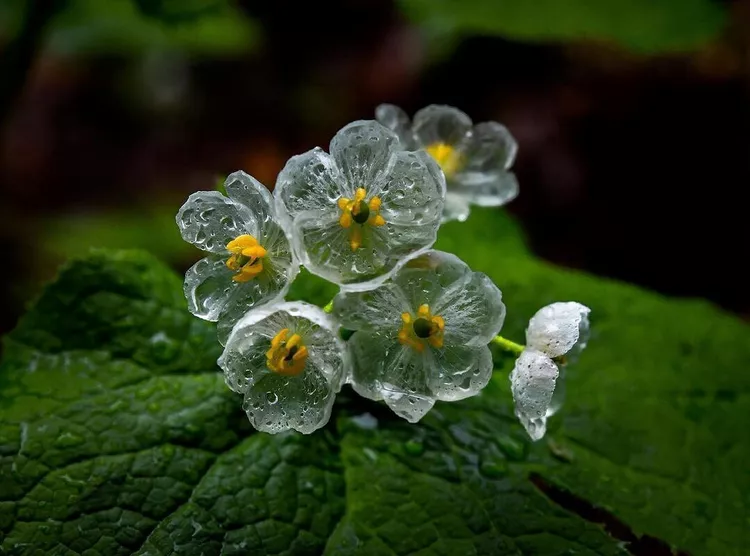
Skeleton flower (Diphylleia grayi) is aptly named. Its white petals turn clear when wet with rain or dew, revealing the veins and support structures inside. When the blooms dry, they appear white again. Skeleton flower is a deciduous perennial used as a groundcover in shady locations. It spreads underground by rhizomes. Individual plants display bright green foliage reaching about 12–18 inches tall and spreading 2 to 3 feet wide.
Skeleton Flower Overview
| Genus Name | Diphylleia grayi |
| Common Name | Skeleton Flower |
| Additional Common Names | Umbrella leaf, Asian umbrella leaf |
| Light | Part Sun, Shade |
| Height | 12 to 18 inches |
| Width | 24 to 36 inches |
| Flower Color | White |
| Foliage Color | Blue/Green |
| Zones | 4, 5, 6, 7, 8, 9 |
| Propagation | Division, Seed |
| Problem Solvers | Groundcover |
Where to Plant Skeleton Flower
Skeleton flower plants grow naturally in Japan and China's cool, forested mountains. The closer you come to providing that environment, the less care and fuss your skeleton flowers need. Shady and protected locations out of the wind are ideal. Dappled light is perfect, but avoid locations with full sunshine, especially afternoon sun. Skeleton flower looks best when planted in groups. Space individual plants about 2 feet apart; they will fill in the gaps.
Check the botanical name, Diphylleia grayi, when ordering or purchasing. Several other plants have "skeleton" in their common name, and some, such as skeleton weed (Chondrilla juncea), are invasive.
How and When to Plant Skeleton Flower
Plant skeleton flower plants purchased as nursery container stock or bare-root plants in spring, two to three weeks after the danger of frost has passed. Amend the soil with compost before planting. Dig a hole twice as large as the root ball and spread the plant’s roots in the hole. Firm the soil to minimize air pockets and provide maximum root-to-soil contact.
Skeleton Flower Care Tips
Skeleton flowers have a reputation for being finicky, but that's only true if they are forced to grow in locations that don't meet their needs. When given the proper conditions, they will slowly spread and form long-lived groundcovers that need little care.
Light
Skeleton flowers are found naturally in the understory of forested areas and thrive in dappled light and shade. Woodland shaded areas are ideal.
Soil and Water
When selecting a site for skeleton flower plants, look for loamy, well-drained but moist soil rich in organic matter (think forest floor, not sunny vegetable garden). Work in leaf mold and compost to provide nutrients and hold moisture in the soil without it becoming soggy. Skeleton flower does best in acidic to neutral soil pH, about 4.5-7.0.
Skeleton flowers like the evenly moist conditions found under the leaf layer of a forest, but they don't want to sit in water. During dry conditions, especially for the first year after planting, provide supplemental water once or twice a week.
Temperature and Humidity
Skeleton flowers adapt to a wide range of climates but do best in areas with cool to cold winters and moderate summers. They are hardy in USDA Zones 4-9.
Fertilizer
As slow-growing groundcovers, skeleton flower plants don't need much in the way of supplemental fertilizer. Mulching annually with compost is sufficient to meet their nutrient needs. In nutrient-poor soils, apply a general purpose, slow-release 10-10-10 fertilizer each spring.
Pruning
Skeleton flower plants don’t require pruning. The foliage dies back in autumn, and the dead leaves and stems can be left in place.
Pests and Problems
Skeleton flower plants aren’t usually affected by pests or diseases.
How to Propagate Skeleton Flower
Division: Skeleton flowers are easily propagated by dividing existing plants. After the frost has passed in spring, gently dig up the skeleton flower. Using a spade or soil knife, separate the root crown and vegetation into several chunks, ensuring each section has a piece of root crown and some leaves. Replant each new section, watering and mulching well.
Seed: To germinate skeleton flowers from seeds, cold-stratify them. The easiest way is to sow them in a suitable location in autumn and let winter weather do the work of dissolving the seed coat and breaking seed dormancy.
When sowing indoors, stratify the seeds in a refrigerator for two to three months. Plant them in a potting mix ¼ inch deep about six weeks before your last frost. Keep the soil mix moist but not soggy. Poor germination rates are the norm, so sow several times more seeds than you desire plants.
Skeleton Flower Companion Plants
Ferns
Ferns of any species native to your area provide shade-tolerant greenery and beautiful foliage. Interplant ferns with other species for a natural look. Ferns deliver color and texture when combined with flowering plants that thrive in shade.
Jack-in-the-Pulpit
Jack-in-the-pulpit (Arisaema triphyllum) is a woodland wildflower with springtime hooded flowers and autumn red berries. It's hardy in Zones 3-9 and tolerant of partial sun or shade. It doesn't require good drainage, so it’s suitable for boggy areas of the garden.
Japanese Primrose
The late spring flowers of Japanese primrose (Primula japonica) brighten up partly shady, damp spots in the garden. The flowers come in pink, red, purple, or white, and are held above the leaves on 18-inch stems. Zones 4-8
New