
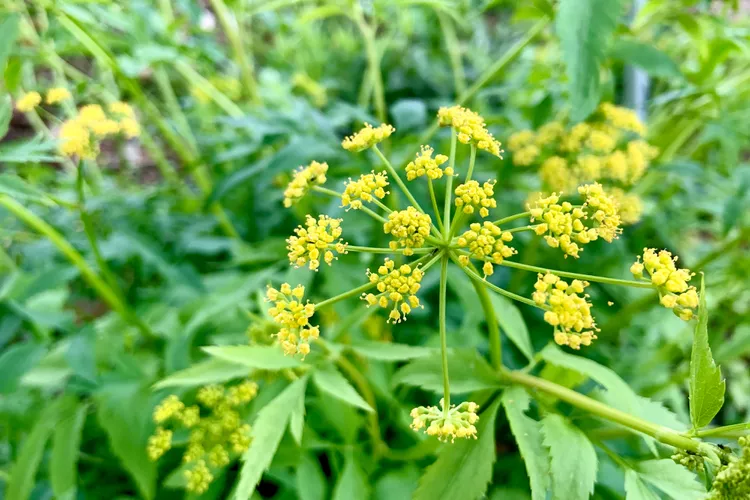
Golden alexander is a tough native perennial that lights up the spring garden with its bright yellow flowers that attract pollinators. Commonly found growing in small colonies in moist prairie soil, in the filtered sunlight of a wet patch of woodland, and in native thickets, golden alexander is a wonderful plant for the home landscape too. Golden alexander has a low-growing, mounding habit. It will spread slowly to form a drift of color and texture, making it an easy-care groundcover.
Golden Alexander Overview
| Genus Name | Zizia aurea |
| Common Name | Golden Alexander |
| Additional Common Names | Wild Parsley, Meadow Parsnip |
| Plant Type | Perennial |
| Light | Part Sun, Sun |
| Height | 1 to 2 feet |
| Width | 1 to 2 feet |
| Flower Color | Yellow |
| Foliage Color | Blue/Green |
| Season Features | Spring Bloom |
| Special Features | Low Maintenance |
| Zones | 3, 4, 5, 6, 7, 8, 9 |
| Propagation | Division, Seed |
| Problem Solvers | Deer Resistant, Drought Tolerant |
Where to Plant Golden Alexander
Because this versatile native handles wet soil well, it's a great plant for rain gardens and other wet areas with full sun, such as depressions near downspouts. It's also a good fit for meadows and native gardens, where you can enjoy its spring color and clean foliage throughout the year. Its relaxed habit is a great fit for a cottage garden as well.
How and When to Plant Golden Alexander
Plant nursery-grown potted golden alexander in early spring as soon as the soil can be worked. Dig a planting hole slightly larger than the plant’s root ball. Plant the golden alexander by backfilling with native soil; no soil amendments or fertilizer is needed.
Water the plants well after planting and water regularly for about a month until established.
Space plants 18 to 24 inches apart.
Golden Alexander Care Tips
Light
A native prairie plant, golden alexander thrives in full sun—more than 8 hours of direct sunlight a day. However, it will also grow in areas that are partially shaded as long as it still receives long periods of direct sunlight.
Soil and Water
The best soil for golden alexander is moist without standing water. It will grow in loam, clay, and soil that is high in organic matter but will struggle in dry, sandy soil. Golden alexander adapts to a wide pH range from slightly acidic to slightly alkaline (6.0 to 8.0).
Moist soil and regular watering are essential for the first few weeks after planting transplants to ensure the new plant establishes a strong root system. Golden alexander started from seed in the landscape also benefits from moist soil conditions when plants are young.
Once established, golden alexander will tolerate slightly drier conditions.
Temperature and Humidity
Tolerant of a wide range of temperatures, golden alexander grows well in USDA Hardiness Zones 3-8. It regularly returns in spring after long periods of subzero temperatures and grows through the heat of summer. Humidity doesn’t affect the plant.
Fertilizer
Like other native prairie plants, golden alexander doesn’t require fertilizer. It grows best in naturally fertile soil. Improve garden soil by working a 2-inch-thick layer of compost into the soil every year.
Pruning
Deadheading the flowers and pruning are optional. Cutting back the flowering stems at the base after the bloom prevents reseeding and gives the plant a tidier look. Pruning prompts it to regrow new foliage.
Potting and Repotting
Golden alexander being a prairie plant, it looks best in the landscape but it can also be grown in containers. Make sure the container has large drainage holes and fill it with a combination of well-draining potting mix and compost. Keep in mind that container plants require more frequent watering than plants in the landscape.
Unlike golden alexander in the garden, in a more northern climate, you will need to winterize potted golden alexander, as containers expose the plant's roots to the cold. Insulate the roots by sinking the container in the ground or by placing it in a second, larger pot to create a planting silo.
Repot golden alexander to a larger pot with fresh potting mix when the root system has reached the sides of the container, or the roots grow out of the drainage holes.
Pests and Problems
There are no notable pests of golden alexander. The plant tends to be short-lived but its ability to reseed and spread assures that it doesn’t disappear from the garden.
If reseeding becomes a problem, simply cut off flower heads shortly after they fade to prevent the plant from creating seeds. If unwanted seedlings do pop up, they are easy to remove when young. Golden alexander does not reseed aggressively.
How to Propagate Golden Alexander
Propagate golden alexander by seed or division.
Allow plants to disperse seed naturally in a meadow or native garden. Collect seeds in midsummer and disperse them by hand in late fall to create a new planting of golden alexander in a specific area. Scatter the seeds on top of weed-free soil in late fall. Golden alexander seed, like the seed of many native plants, needs an extended cold period (known as stratification) to germinate. Winter will serve as that cold period. The seeds will germinate in early spring.
Another propagation method is to divide a mature plant in early spring. Using a sharp spade, lift the plant's roots out of the ground and divide the entire plant into several sections with at least a few stems and accompanying roots on each section. Replant the divisions at the same depth as the original plant. Water well until established.
Golden Alexander Companion Plants
Plant golden alexander with other easy-care native plants for a garden that will attract and support pollinators. Some good choices include columbine, false indigo, and sedges.
Columbine
Native columbine (Aquilegia canadensis) produces nodding, bell-shaped. yellow and red flowers in spring that attract hummingbirds. It can reach 2 or 3 feet tall in bloom. Plant this perennial in part shade in Zone 3-8
False Indigo
Wands of bluish-purple, pea-like flowers appear in late spring on false indigo (Baptisia australis). This tough native perennial grows about 4 feet tall and wide in full sun to part shade. Zone 3-9
Palm Sedge
Carex muskingumensis is a sedge native to western North America, It forms dense clumps of green, strappy leaves that resemble miniature palm tree fronds. It grows 2 to 3 feet tall in full sun to part shade. The plant thrives with plenty of water and will even grow in shallow water but will tolerate drought. Zone 4-9