
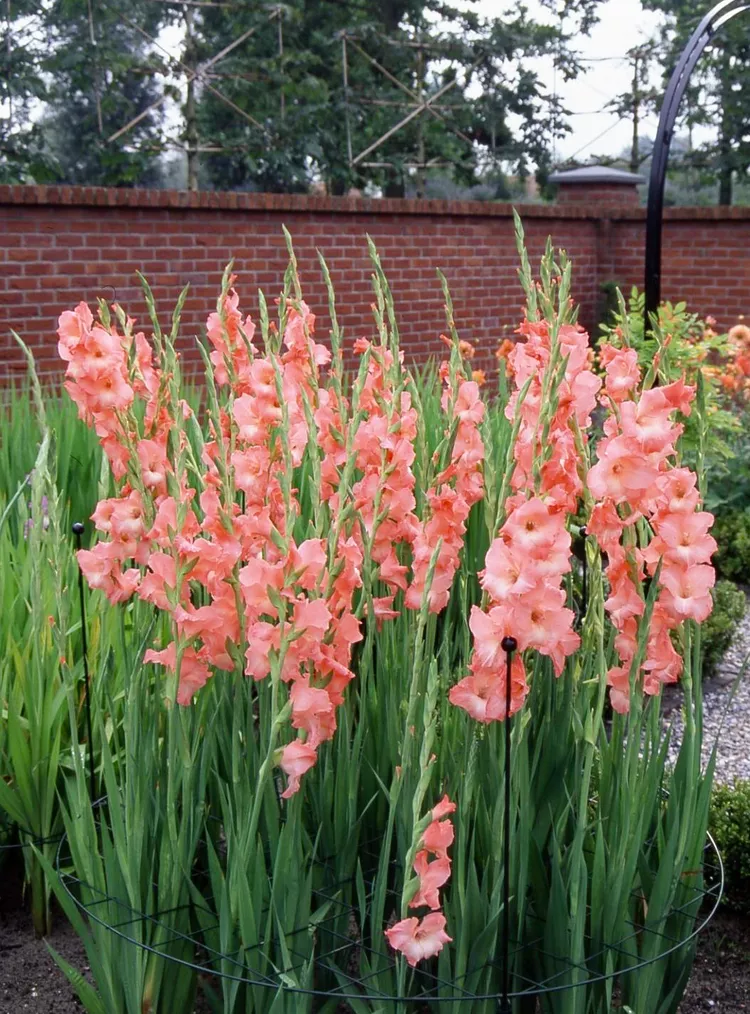
The retro look of gladiolus flowers is popular once again. These easy-to-grow bulbs bring a lot to the garden party, including a huge color palette, vertical interest, and bloom times that harmonize well with summer's most colorful perennials. They're versatile cut flowers, and the ruffled single florets can even be plucked off the stem and arranged in vases and bowls. The perfumed Abyssinian gladiolus is a rare plant that everyone can enjoy.
In the garden or a vase, gladiolus adds garden-fresh drama. An old-fashioned flower originally from South Africa, the lofty flower spikes of gladiolus emerge from disc-shaped corms planted in spring. When done right, fresh-cut flower spikes will last for more than a week in a vase. Search your favorite online bulb retailer for glads—you'll find varieties with blossoms in nearly every color of the rainbow.
All parts of gladiolus are toxic to humans, dogs, cats, and horses.
Gladiolus Overview
| Genus Name | Gladiolus |
| Common Name | Gladiolus |
| Plant Type | Bulb |
| Light | Sun |
| Height | 3 to 6 feet |
| Width | 1 to 2 foot |
| Flower Color | Green, Orange, Pink, Purple, Red, White, Yellow |
| Foliage Color | Blue/Green |
| Season Features | Summer Bloom |
| Special Features | Attracts Birds, Cut Flowers |
| Zones | 10, 8, 9 |
| Propagation | Division, Seed |
Where to Plant Gladiolus
In spring, plant gladiolus corms in an area with full sun and well-draining soil that has been amended with compost. Most gladiolus corms overwinter in the garden only in Zones 8–10. These tender plants are not winter hardy in garden Zones 7 and colder and must be planted each spring in those zones. However, some cultivars can grow in warmer parts of Zone 7. Continue planting gladiolus every couple of weeks for a continuous cut-flower harvest.
Call on gladiolus when you need a dramatic focal point in the garden or bold vertical structure. The sword-shaped foliage and upright flower stalks draw attention.
If you are growing gladiolus primarily for cut flowers, plant the corms in rows as you would vegetables. Row planting makes for easy soil preparation, planting, staking, and harvesting in midsummer.
Add a row of gladiolus to your vegetable garden, planting the corms at the same time you plant tomatoes.
How and When to Plant Gladiolus
Begin planting gladiolus corms in spring, two weeks before the last expected frost date.
Need help getting started? Be sure to plant the pointed side of the corms up, about four times as deep as their width. Space the glad corms 6 to 8 inches apart. If you are planting gladiolus in a garden bed, plant in drifts of at least seven bulbs for a pleasing display. Spread a 2-inch layer of mulch on the soil surface and water the newly planted corms well. Leaf stalks will emerge in a couple of weeks.
Harvest bouquets of glads for six weeks or more in summer by staggering the planting of corms. Plant a group every two weeks in spring. Stop planting in mid-June to give the plants plenty of time to mature before a damaging freeze in fall. When planting long rows of corms to use as cut flowers, plan to stake each stem along one side of the row, tying the stems to the plants they grow.
Gladiolus Care Tips
Light
Gladiolus thrive in full sun. They will bloom in shade, but the flowers will be smaller, and the flower stalks will be floppy.
Soil and Water
Well-drained soil is essential for this plant to thrive. If your soil is filled with clay, is too wet, or is boggy, plant gladiolus in raised beds. The plants need 1 inch of water a week, slightly more if they are in raised beds, but don't overwater them.
Temperature and Humidity
Drought-tolerant gladiolus grows well in hot, dry conditions, although it welcomes moderate water during the summer. The ideal temperature range is 50°F-75°F, but it tolerates up to 100°F. It does not do well in cold weather.
Fertilizer
When planting in spring, amend the soil with compost. Add a balanced, water-soluble fertilizer when the plants reach 10 inches high and again when the flowers start to show their color, following the product instructions.
Pruning
Gladiola don't require pruning. They are grown as annuals or as cut flowers. In areas where they overwinter in the ground, deadhead the flower stalks after their blooms are spent to prevent self-seeding. Cut back the remaining foliage for the winter.
Potting and Repotting Gladiolus
Gladiolus is an excellent container plant. Fill a large deep pot that has drainage holes with well-draining potting soil amended with compost, spacing the corms about 2-3 inches deep and 4 inches apart. Move it to any part of the garden that needs a pop of color. Prepare other pots a month apart for continuous color all summer and into fall.
Keep the pot in a sheltered spot for the winter, and the gladiolus will bloom again the following year, or remove newly formed corms for propagation purposes and repot each year.
Pests and Problems
The best way to avoid problems with gladiolus corms is to plant only healthy corms. Discard any that are damaged or soft.
Thrips are the main pest of gladiolus. They feed on the flowers and leaves. Spray the plants at the first sign of damage with insecticidal soap or neem oil.
How to Propagate Gladiolus
Propagate gladiolus by dividing corms or via harvesting seeds.
Division: Dig up gladiolus corms for storage at the end of the season. Each corm will have several baby corms called cormlets attached to it. Carefully remove the cormlets, store them over the winter in a dry place, and plant them separately in spring. They will grow a plant the first year but not produce a flower. Dig them up in the fall and store them over the winter as you do your other gladiolus corms. Replant them in spring, and they will reach flowering size during the second year.
Seeds: To harvest seeds from gladiolus, leave the flowers on the stalks for about six weeks after they die and recover the hard casing that is filled with seeds. Open the casing to remove the seeds. Store them in a cool, dry place. In spring, sow one seed each in 4-inch pots filled with potting soil. Barely cover the seed, water the pot, and cover it with plastic. When the seed sprouts, remove the plastic and move the pot to a sunny spot. Grow the plant outdoors in its pot for the first year, harvest the tiny cormlet it produces, and store it for the winter. For the next two years, plant the cormlet outdoors and dig it up to store for winter. By the third year, it will reach flowering size.
Harvesting Glads
To ensure that your cut flowers will last, cut the flower spikes when only one or two blossoms are open. The remainder of the buds will follow in the first bloom's footsteps. Immediately plunge the stems in lukewarm water. As lower flowers fade, pull them off and cut about an inch of the stem off the bottom of each spike every few days.
Storing Glad Corms
In Zones 7 and colder, glad corms can be dug up in the fall and stored for planting back in the garden in springtime. Once a harsh frost kills gladiolus foliage, dig up the corms. Shake off excess soil and place the corms in a warm, dry, airy place for about three weeks. Make sure to get rid of any shriveled, old, spent corms, placing the healthy bulbs in a paper sack to store in a cool and dry place until spring. Many gardeners choose not to dig and store glads; they purchase new corms each year. The choice is yours!
Types of Gladiolus
Abyssinian Gladiolus
Gladiolus callianthus var. murielae is unique because it sports extremely fragrant, butterfly-shaped flowers on arching stems in late summer. The white petals have deep purple centers. It grows 4 feet tall. Zones 8-10 and warmer parts of Zone 7
'Black Beauty' Gladiolus
Gladiolus x hortulanus ‘Black Beauty’ dominates the summer garden with its deep red, velvety flower spikes that appear almost black. They bloom for an extended time—four weeks!—and attract hummingbirds. They are deer-resistant and grow to 5 feet tall. Zones 8-10 and warmer parts of Zone 7
'Priscilla' Gladiolus
Gladiolus 'Priscilla' is a feast for the eyes with its multi-colored blooms of light yellow, white and pink and darker pink fringe. These beauties deserve a prime spot in the garden where the pastel flowers grow on stalks 4-5 feet tall. Zones 8-10
'Yellowstone' Gladiolus
Gladiolus 'Yellowstone' adds sunny yellow blooms on flower stalks that grow up to 5 feet tall to the back of a garden bed. These tall beauties need to be staked, but they are excellent cut flowers. Zones 8-10
Gladiolus Companion Plants
Pair gladiolus with sturdy perennials that can provide support for these tall, petal-packed flower spikes.
Dahlias
Dahlias, grown for their beautiful flowers, come in all colors except the elusive blue. They bloom nonstop from summer until frost in a variety of shapes and sizes. As cut flowers, they last several days, making them excellent for homegrown bouquets. Dahlia plants are hardy in warmer regions but can be saved year after year in colder areas by digging up their large, tuberous roots in the fall and replanting in the spring.
Peonies
Peony flowers vary from simple six-petal varieties to those with dramatic ruffled blooms. They are known for their beauty and numerous color options, such as pastel shades of pink, yellow, orange, deep reds, and whites. The foliage of peonies can be beautiful, especially when they first emerge in spring with deep burgundies and greens. As the foliage ages, it becomes a rich leather green which provides a lovely backdrop for peonies and other surrounding plants.