
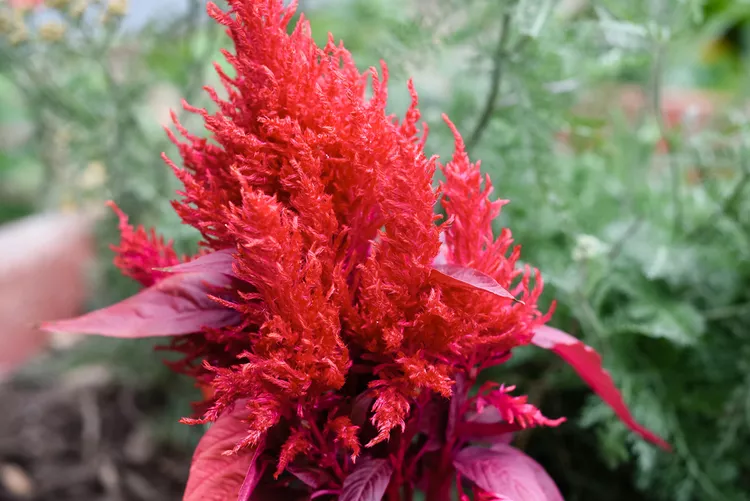
There are few flowers as showy as celosias. Whether you plant the plumed type with its striking upright spires or the crested type with its fascinating twisted form, celosia is sure to stand out. The blooms are rather stiff and waxy, making them a great option for bouquets. The plant's colorful flowers are produced in abundance all over the plant, and they last for a very long time. While aging naturally on the plant, celosia flowers fade to a whisper of their previous hue, taking on a straw-like appearance. The flowers can be dried easily if hung upside down.
Celosia leaves are generally light green with a colored mid-rib that matches the bloom on the plant. Some newer varieties have attractive burgundy foliage, which deepens in color in full summer sun. The stems of the plant also reflect the color of the bloom, creating a striking effect.
Celosia Overview
| Genus Name | Celosia spp. |
| Common Name | Celosia |
| Plant Type | Annual |
| Light | Sun |
| Height | 6 to 36 inches |
| Width | 6 to 24 inches |
| Flower Color | Orange, Pink, Purple, Red, White, Yellow |
| Foliage Color | Blue/Green, Chartreuse/Gold, Purple/Burgundy |
| Season Features | Fall Bloom, Summer Bloom |
| Special Features | Cut Flowers, Good for Containers, Low Maintenance |
| Propagation | Seed |
Where to Plant Celosia
As natives of East Africa and the Mediterranean, celosias enjoy warmth. They are low-maintenance annuals in most areas and tender perennials in USDA Hardiness Zones 10 and 11. Plant established seedlings in a location with full sun and well-drained organically rich, slightly acidic soil.
Celosias do better in garden beds than in pots. Plant them in border where you want a spiky note of color amid more mounding plants. They look best when planted in groups of three to five rather than individually.
How and When to Plant Celosia
Don't be in a hurry to plant celosias in the spring. Wait until there is no longer any danger of frost. Dig a hole about twice the diameter of the nursery pot and about the same depth. Place the plant in the hole and fill in original soil to the top of the root ball. Gently tamp down the soil. Water deeply after planting,
Space the plants 6 to 12 inches apart, depending on the variety.
Make sure you choose celosia varieties that are size-appropriate for your space. Large coral-like ockscomb varieties have big, heavy blooms that require staking.
Celosia Care Tips
Light
Celosia plants need full sun for at least eight hours every day,
Soil and Water
Celosia flourishes in rich, well-drained soil with moderate watering. Soil with a pH of 6–6.5 and high organic content is ideal.
Temperature and Humidity
Celosia plants love the heat and die when the temperature drops into the 40s. They prefer high humidity—up to 90 percent during summer months.
Fertilizer
Apply a general-purpose fertilizer at planting time. After planting, apply a fertilizer that contains more phosphorus than nitrogen monthly.
Pruning
The plant holds onto the blooms until they have dried. They must be manually removed to keep the plants looking attractive and fresh.
Pests and Problems
Overall, celosias are resilient plants with very few problems. A few pests to watch out for are aphids and spider mites. The latter are especially a problem in hot, dry weather.
Be gentle when handing the plants, as the stems are succulent and prone to breakage.
How to Propagate Celosia
Celosia is easy to grow from seed. Note, however, that the seeds that you collect from cultivars may not produce plants that are true to the parent. If you want a specific variety, buy fresh seeds from a seed company.
To get a head start on the growing season, start the seeds indoors 10 weeks before the average last frost date in your area. Plant the seeds ¼ inches deep in pots filled with soilless seed-starting mix. Keep the seed and media moist at all times. At 75 to 80°F, germination will take 7 to 10 days. Place the seedlings in bright direct light or under grow lights to prevent them from growing spindly.
Types of Celosia
Wheat Celosia
Celosia spicata is a species with candle-type blooms that cover the plant in narrow upright blooms reminiscent of wheatgrass seed heads.
Plumed Celosia
Celosia argentea var. plumosa, also known as feather celosia, has broader-based flowers than Celosia spicata types. These blooms look like little flames perched atop the plants.
Crested Cock's Comb
Celosia cristata with its coral-like appearance, is the most unique looking of the celosia group. Because it grows so much larger than its counterparts, this celosia variety tends to flower less, sometimes producing only one bloom at a time.
'Amigo Red' Celosia
Celosia 'Amigo Red' offers crested red flowers on a compact plant with excellent heat and drought tolerance. It grows 6 inches tall and wide.
'Flamingo Feather' Celosia
Celosia 'Flamingo Feather' grows 4 feet tall and bears candle-type pink flowers that dry well.
'Fresh Look Yellow' Celosia
Celosia 'Fresh Look Yellow' grows about 20 inches tall and bears abundant plume-type yellow flowers.
'Intenz' Celosia
Bright fuchsia candles cover Celosia 'Intenz' all season, and the plants usually reach 12–16 inches tall.
'Fresh Look Red' Celosia
Celosia 'Fresh Look Red' is an award-winning selection with plumes of rosy-red flowers. It grows 18 inches tall.
'New Look' Celosia
Celosia 'New Look' bears red plumes and beautiful purple-tinged foliage. It grows 14 inches tall.
'New Look Red' Celosia
Celosia 'New Look Red' grows 20 inches tall and bears red flowers over burgundy-red foliage.
Celosia Companion Plants
Angelonia
Angelonia is also called summer snapdragon, and once you get a good look at it, you'll know why. It has salvia-like flower spires that reach 1-2 feet high and are studded with fascinating snapdragon-like flowers with beautiful colorations in purple, white, or pink. It's the perfect annual for adding bright color to hot, sunny spaces. This tough plant blooms all summer long. While all varieties are beautiful, keep an eye out for the sweetly scented selections.
African Marigold
There's nothing subtle about an African marigold. It's a big, flamboyant punch of color for the sunny bed, border, or large container. Most are yellow, orange, or cream. These annuals grow up to 3 feet tall and produce huge 3-inch puffball blooms, while dwarf varieties get just 1 foot tall. The mounded dark green foliage is always clean, fresh, and tidy. Grow them in a warm, sunny spot with moist, well-drained soil all summer long.
Nasturtium
Nasturtiums easily grow from seeds sown directly in your garden's poorest soil and bloom all season until frost without much fertilizer. Nasturtiums are available in either spreading or climbing types. Plant spreading types in large containers to spill over the sides. They are also a great addition to a rock garden or planted between paving stones. Train climbing types up trellises or alongside fences. The leaves and flowers of nasturtiums are edible; use them as a showy plate garnish or to jazz up salads.