
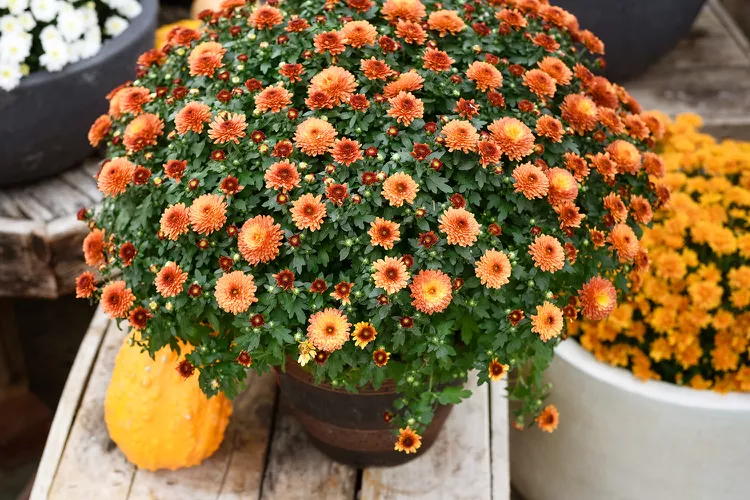
It can be pricy to buy big, flower-covered mums to decorate your porch with rustic fall colors. So you may be wondering, are mums perennials that you can keep around from year to year or do you have to buy new ones every autumn? Those types of mums are, in fact, perennials. However, if you plant them in a flowerbed when leaves are falling and pumpkin spice everything is at its peak, they likely won’t make it through the winter.
Garden mums are winter-hardy when planted and cared for properly in Hardiness Zones 5-9, but most mums sold in fall are intended to be treated as annuals. The grower did the work to take them from small cuttings to full-grown, bushy, blooming plants and timed it for your region to give you color in autumn. But you can still keep them alive for next year with proper care.
How to Grow Mums as Perennials
Though garden mums are perennial in most of the U.S., they typically die over winter. Why? Fall-purchased mums have used most of their energy for flowering, and they are often planted too late in the growing season to establish enough of a root system before going dormant. To encourage perennial mums to return year after year, here are the keys to success:
- Plant mums in spring or summer, giving them time to establish.
- Place mums in a spot with full sun (afternoon shade is recommended in hot climates) and good drainage.
- In areas with cold winters, 4–6 inches of mulch protects their shallow root systems.
- Don't cut back the old growth until spring. The old growth helps to hold the mulch in place over the winter so the mums will be more likely to survive.
How to Overwinter Mums in Pots
If you didn’t get your potted mums planted in the ground by about four weeks before your first frost, repot them into a larger container to overwinter them. Mums are often root-bound by the time they are sold in early fall, limiting the water and air the roots can access. Then follow these steps to overwinter mums in pots:
- Move potted mums inside on frosty nights and place them back outside during the day.
- When the weather stays at or below freezing, bring potted mums indoors. Place them in a dark space–really dark, not just a dim corner–that stays cool but above freezing. They’ll go dormant.
- Check the soil moisture every few weeks with your finger and give the plants a little water if the soil is dry. They won’t use much water over winter, but dehydration can still kill them if the soil dries out completely.
- After the last frost in spring, bring out your potted mums and trim off the dead stems. Give them a bit of water and slowly start allowing them to have more light, just as you would harden off seedlings. After a week of gradual exposure to light, they’re ready to spend the growing season outside.
- Go ahead and plant your mums if you want to avoid overwintering them indoors next year. Choose a sunny spot and add some compost and organic fertilizer to the soil before planting.
Never use garden soil when repotting mums. Instead, use a good quality potting mix that will provide enough drainage.
Pinching Perennial Mums
Garden mums purchased in fall have been lightly trimmed (or pinched) multiple times throughout the growing season, shaping and training them to be branchy and mounded for display in autumn. If you grow them as perennials, you must do some of that yourself. Don’t worry; it’s easy.
In garden terms, pinching is removing the growing tip of a shoot. The plant replaces the one lost tip with two or more new ones, creating a branching, bushier shape. Pinching every two to four weeks produces many new shoots, which eventually grow buds and flowers. Unpinched mums often look leggy and spindly and don’t have many flowers in comparison.
How to Pinch Mums
- Start when the new vegetation is 4–6 inches tall.
- Pinch off the growing tip between your finger and thumb (or use scissors).
- Remove about an inch of growth.
- When the new shoots that result from pinching are a few inches tall, pinch them again.
- Keep going, pinching two or three more times, creating a rounded or spherical shape when you pinch.
- Stop pinching about the Fourth of July to give them time to set buds for fall flowering.