
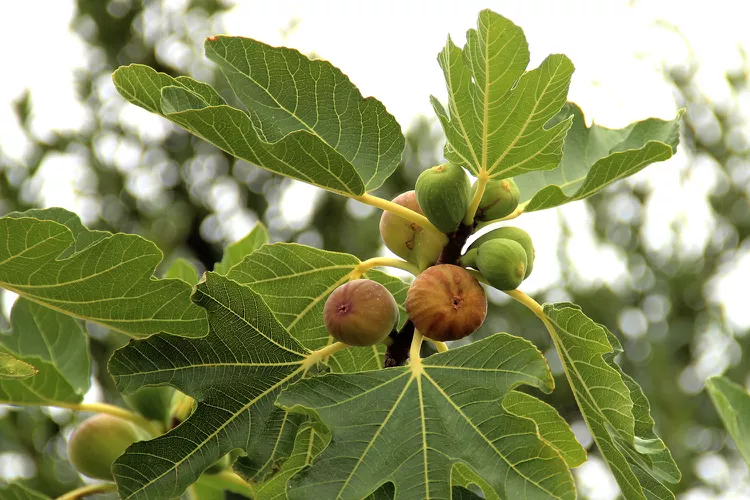
Homegrown figs are a tasty treat and if you live in a climate where they grow well, it's well worth planting one in your yard. With their big, tropical-looking leaves, smooth gray bark, and of course their iconic fruit, figs make attractive additions to just about any style of yard. Throw in drought tolerance, fragrant leaves, and disease resistance, and these gorgeous small trees have just about everything you could want in a fruit tree. These simple pruning tips will help you keep your fig trees manageable and bearing fruit consistently every year.
What are figs?
The common edible fig belongs to the genus Ficus, which includes hundreds of species throughout the world, with most originating in the tropics like popular fiddle leaf fig houseplants. Common figs, however, are native to the Mediterranean and Western Asia, where they have been grown for their sweet fruits for thousands of years. Coming from more temperate climates, deciduous common figs can grow much further north than their tropical cousins and thrive in USDA Zones 7-10. Some cultivars such as ‘Chicago Hardy’ can even survive all the way down to Zone 5! With a protective layer of mulch or leaves, common figs can stay dormant in the soil until spring arrives, even as far north as central Minnesota.
Most species of figs are pollinated by various kinds of wasps that enter the young fruit and pollinate the flowers within. Fortunately, most common fig varieties are able to produce mature fruit without the need for cross-pollination, so no wasps are necessary.
When to Prune Figs
Common figs will typically grow upwards of 30 feet tall with age and produce large, gnarled branches that spread far and wide. They’re beautiful trees, but they do require quite a bit of space if allowed to grow naturally. However, figs respond well to heavy amounts of pruning. These trees also produce fruit yearly on new growth, which means they can be heavily shaped and trimmed each growing season without sacrificing the next year’s fruit crop.
The best time to prune fig trees is in the winter, while the trees are dormant. Newly planted figs should be pruned after the tree’s first growing season, before a new flush of spring growth. Upwards of 50% of the first year’s growth can be trimmed off to create a stout, sturdy trunk. During the first few years, the creation of a strong central leader, healthy root system, and a few healthy main branches should be the main goal. These main branches will produce new growth each year that's capable of bearing the weight of the fruit.
Tips for Pruning Fig Trees
Similar to other fruit trees, trimming should involve cleaning up any dead or broken branches, followed by eliminating any crooked or crossed branches that would eventually lead to cramped future growth. Opening up the canopy to allow for good air flow while still keeping the plant somewhat compact is optimal for both the production of new growth as well as long term stability and health of the tree.
Many fruit trees such as apples and peaches are grafted onto a separate rootstock, but fig trees are usually grown on their own roots. However, after a couple of years, figs may begin to produce suckers from around the trunk of the tree. Trim away any side shoots from both above and below the soil level. This will encourage growth within the main branches where fruits are produced, instead of weaker side shoots.
A notable characteristic of figs is their thick, white, sticky sap. Trimming of any growth, including picking the fruit, will result in the release of sap and it can quickly gum up pruners and other tools. Keep a cloth rag and solvent on hand to clean off tools after use and maintain sharp blades for clean cuts.
As the tree matures, continue pruning each spring to maintain shape and form. Trim back main branches by about one third and eliminate smaller branches too weak to bear the weight of fruit. A well-pruned fig tree can live many hundreds of years.