
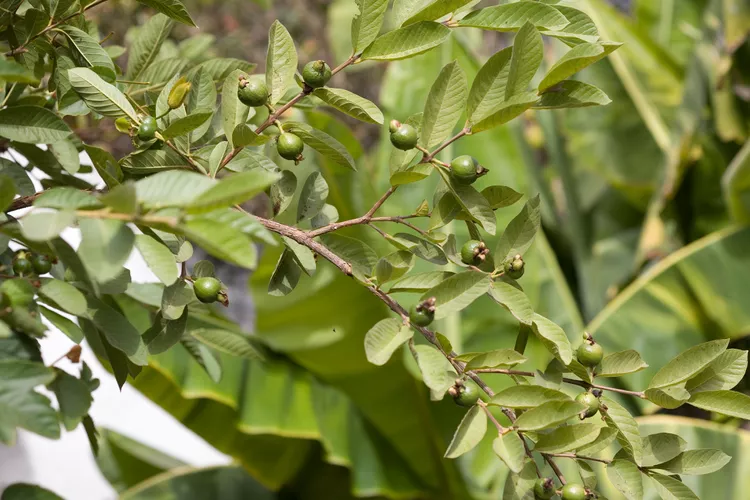
If you love guava fruit, you may be tempted to grow a guava tree. Tropical trees such as guavas don't typically grow in the United States because they need a hot and humid climate. And they don't fare well in cold zones, frost, or wind. However, they are easy to grow outdoors in USDA Zones 9-11, such as in Florida, Hawaii, and some areas in Texas and California. Or they can be grown indoors as a houseplant. This guide explains what you need to know about growing your own guava tree indoors or out.
Native to Central America, guava trees are considered invasive in Hawaii and parts of Florida. It easily escapes cultivation in warm regions around the world and naturalizes in wild areas.
Guava Overview
| Genus Name | Psidium guajava |
| Common Name | Guava |
| Plant Type | Fruit, Tree |
| Light | Sun |
| Height | 15 to 20 feet |
| Width | 10 to 15 feet |
| Flower Color | Pink, White |
| Foliage Color | Blue/Green |
| Zones | 10, 11, 9 |
| Propagation | Seed, Stem Cuttings |
Where to Plant Guava
Guava trees need lots of sunlight and humidity to grow. Choose an area that provides plenty of space for a guava tree to flourish and is planted away from buildings, structures, or other trees and is protected from the wind. Space guava trees 16-26 feet apart.
You can also grow this tree indoors or partially indoors, especially if you live in a region that gets cold in the winter. However, there's never a guarantee indoor guava trees will bear fruit as they need lots of sunlight, humid conditions, and at least another tree to pollinate to produce fruit. Plant guava in a large and wide pot and place it on a small platform with wheels so you can easily move it around when needed. Choose a sunny window where this tree will get at least six hours per day.
How and When to Plant Guava
Guava trees are typically planted in summer in June and July. If you choose to grow a guava tree indoors year-round or move it indoors during the colder months, make sure it receives full sunlight. And if you want fruit, you'll need another tree so it pollinates. When grown indoors you can grow it anytime as long as its basic needs are covered. A sunroom or greenhouse is an ideal indoor location for these trees to thrive.
Guava Care Tips
Guava trees need the right conditions—lots of sun, and a warm, humid climate without exposure to cold or frost to grow. If you want to grow this tree but there are cold spells where you live, you'll need to plant the guava in a large pot that can be moved outdoors in the spring and summer and indoors during the colder months.
Light
Plant guava trees in full sun to ensure they produce an abundance of flowers that will become fruit. These trees need a minimum of six hours of direct sunlight a day but do best when they receive eight to ten hours of light.
Soil and Water
Guava trees adapt to most types of soil but do best in soil with lots of organic matter and with a pH of 5-7. Make sure the soil has good drainage.
When you first plant a guava tree, water every other day for a week and then once or twice a week through the growing season. In the winter, you can reduce how much you water with cooler temperatures.
Temperature and Humidity
Guavas do best in temperatures ranging from 65-90°F. If you live in an area that has a hot and humid climate but in the winter temperatures drop or there are cold spells, consider growing your guava tree in a large container that you can move indoors for the winter. If you live in a hot climate but without humidity, such as the desert, guavas won't do well.
Fertilizer
Fertilize the tree every couple of months. Once a tree is established, fertilizing once every quarter is typically sufficient. During the colder season, there's no need for fertilizer as the tree will be dormant. Guavas need an extra boost of iron and magnesium. Consider a slow-release fertilizer such as 5-5-5 or 6-6-6.
Pruning
Pruning is necessary to keep your guava tree healthy. Use sterilized pruning shears to cut back any diseased branches so it doesn't affect the growth of the tree as well as any damaged branches. If you want to keep your tree to a specific height, prune every other year at the end of winter. Pay attention to any new buds and cut above them as to not snip away new growth.
Pests and Problems
Several pests can bother this tree, including fruit flies, whiteflies, and mealybugs. Check the tree and the leaves occasionally to stop an infestation before it gets out of hand. Neem oil or insecticidal soap can help control a stubborn infestation.
Harvesting Guavas
Guava trees usually begin to produce fruit within a few years after planting. Fruits are oval-shaped, and vary in size from an apricot to a softball. The green skin turns yellowish as the fruit ripens. Harvest guavas when the skin feels slightly soft under light pressure. You can eat the guava fresh, turn it into jams and jellies, or use it for juice, but remove the seeds first.
How to Propagate Guava Trees
Guava trees are easily propagated by seeds. Take the seeds from the fruit and soak them in warm water for a minimum of 24 hours before you place them in moist soil. Another option is to take cuttings from branches, though this method requires more effort, time, and know-how. You'll need a piece of bark from the tree and a rooting hormone to be able to propagate cuttings successfully.
Types of Guava Tree
Indonesian Seedless
As the name suggests, 'Indonesian Seedless' has no seeds in its sweet fruit that has yellow-green skin and white flesh when ripe.
Red Malaysian
'Red Malaysian' is a guava variety that has a striking maroon color to its new growth, pink flowers, and reddish purple fruit with pink flesh.