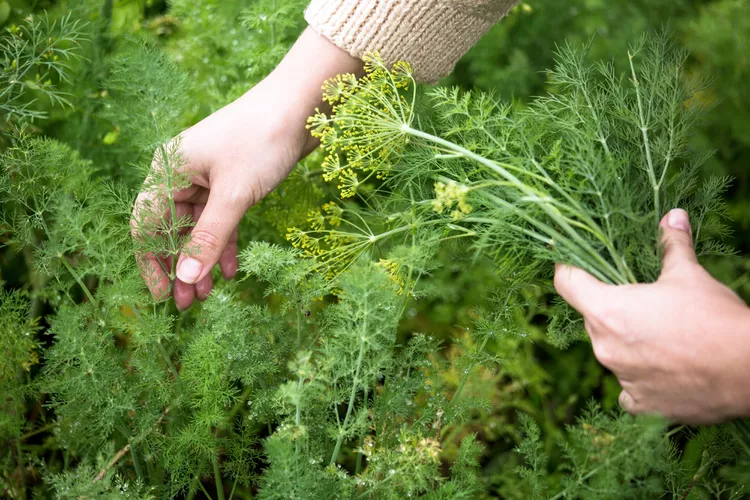
Growing dill is a great way to always have plenty of this tasty herb on hand for flavoring seafood, dips, potato salad, homemade pickles, and other dishes. However, when and how to harvest dill depends on what you want to use it for. Its leaves, flowers, and seeds are all edible and tasty. Enjoy each of these parts of the plant with this simple harvesting guide. Plus get tips on storing your freshly picked dill correctly.
When to Harvest Dill
Dill is a cool-weather herb that bolts in the heat, so plants are typically sown and harvested in spring and autumn gardens. If you want to extend your dill harvest, sow seeds in succession so you can harvest fresh dill in the summer months, too.
Generally speaking, dill is a cut-and-come-again herb that’s harvested little by little as needed for recipes. However, dill plants can be harvested more aggressively before summer and fall frosts since plants won’t survive the heat or extreme cold.
Compared to many other herbs, dill is a fast grower. Plants grown from seed are ready to harvest four to eight weeks after planting. It’s time to start picking dill when your plants are at least 6 inches tall and have at least four to five leaves.
Fresh dill wilts and begins to lose its bright flavor soon after harvesting, so it is best to use dill as soon as possible.
How to Harvest Fresh Dill Leaves
Dill plants have tender stems; they can be harvested with scissors, garden shears, or fingers. However, fresh dill doesn’t last long in the fridge, so it’s best to harvest only as much dill as you can use right away unless you intend to preserve it by freezing or drying.
In some areas, fresh dill can be harvested throughout the season, but the best flavor is obtained if you pick the plants right before they flower. Thoroughly watering dill plants the day before harvesting helps the plants recover faster and washes off the dill leaves, leaving you with a cleaner harvest.
When you’re ready to harvest dill, cut or pinch off the feathery dill leaves at the point where the leaves emerge from the plant’s main stem. Harvest the older outer dill leaves first, leaving the central leaves untouched. Harvesting from the center of dill plants can slow the plant’s growth and cause it to produce fewer leaves.
Like other herbs, dill can be stressed by overharvesting, so never harvest more than a third of the dill leaves at once. If you use a lot of dill in your kitchen, grow multiple dill plants and pick a few leaves from each plant when you harvest. If your plants are about to bolt in summer or be damaged by autumn frosts, clip the entire plant off at the soil line so it doesn’t go to waste.
After harvesting dill, handle stems and leaves as gently as possible to avoid unnecessary damage, and don’t wash dill until you use it. Damage and excess water can speed up decay and make the leaves mushy.
How to Harvest Dill Flowers
When hot weather arrives, dill plants begin to bolt, which means their stems quickly stretch upward and produce flowers, and their flavor changes significantly. Many gardeners pinch off the flowers to extend the dill harvest. The flowers are edible, but they’re essential to leave on the plants if you want to harvest the seeds for pickling and other recipes.
How to Harvest Dill Seeds
To harvest dill seeds, allow the plants to bloom, and then pick the flowers when they begin to brown on the plant and the seeds inside have started to dry and turn a pale brown color. Loosely bundle a few seed heads by their stems with a rubber band and hang the stems upside down in a perforated paper bag in a warm, dry place. Let the herb seeds dry for a week or two until they are easy to shake out of the dill flowers and the seed coats are brittle and break if you try to bend them.
Tips for Storing Dill
Store fresh, homegrown dill in a plastic zipper top bag with a damp paper towel in your fridge's crisper drawer. You can also place cut stems in a glass with an inch or two of water and put a plastic baggy over the leaves to lock in humidity. Replace the water daily, and the dill should stay fresh in the fridge for up to a week.
For longer storage, this herb can be frozen whole or chopped and frozen with water in ice cube trays. Dill can also be dried with a dehydrator or an oven set on its lowest setting. Or dry this herb by loosely bundling stems with a rubber band and hanging them in a warm, dry place until the leaves are completely dried out and easy to crumble with your fingers.
New