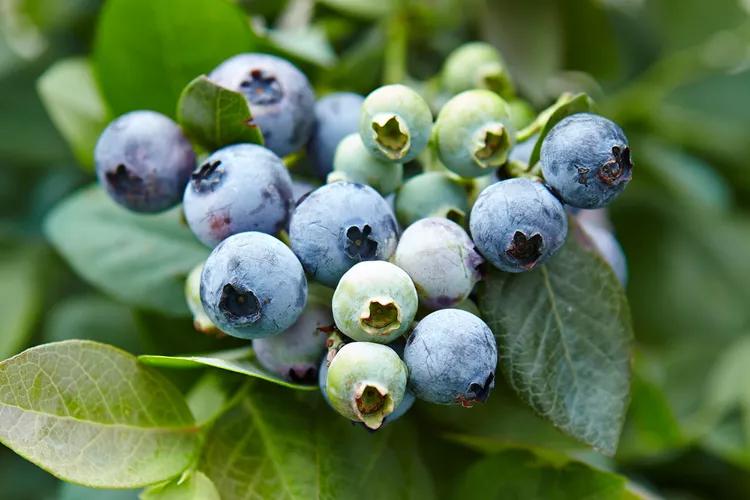
Ensuring you have the right blueberry soil pH is an essential part of enjoying an abundant harvest of sweet, juicy berries. Most gardens have a relatively neutral soil pH of around 6.0 to 7.0, but blueberries grow best when the soil is on the acidic side with a pH between 4.0 to 5.5. Growing acidic soil-loving blueberries outside of this pH range can result in stunted shrubs with minimal berries, yellowing leaves, and other signs of nutrient deficiencies.
Use these tips to adjust soil pH levels before planting blueberries or to change the soil pH around existing blueberry plants to the ideal range. Keep in mind that it’s easier to modify soil pH before planting because you don’t need to work around established plant roots.
1. Choose the right growing location.
While you can adjust garden soil with various amendments, it’s much easier to grow blueberries in locations that are already well-suited for acid-loving plants. Look around your garden and see if there’s an area that fits the specific conditions blueberries need to grow. Full sun to part shade locations with acidic, sandy loam soils that are well-draining are ideal for growing blueberries.
2. Do a soil test.
Soil tests are recommended no matter what plants you want to grow, but they’re particularly useful with blueberries. Blueberries are picky about their soil, and soil tests let you know if your soil needs adjustment and which amendments to use. Soil tests can be performed at home, but you’ll get more accurate results using a soil test kit from your local cooperative extension office.
3. Consider raised beds or container growing.
As useful as soil amendments are, soil acidifying products can only alter soil pH levels to a certain degree. If your soil pH is over 6.5, it may be easier to grow blueberry plants in large containers or raised beds. If you go this route, choose containers that are at least 24 inches deep by 30 inches wide and fill them with potting mix or raised bed soil specially designed for acid-loving plants.
4. Plan ahead when lowering pH.
Elemental sulfur is commonly used to lower soil pH, and it is approved for organic growing. However, sulfur takes a few months to start working and should be applied six months to one year before you intend to plant blueberries. One way to use sulfur is to apply sulfur treatments in autumn and plant blueberry shrubs the following spring.
5. Apply elemental sulfur.
Elemental sulfur usually comes in powder form, which can be applied by hand or with a broadcast spreader. If you’re preparing a new planting spot, spread sulfur over the ground and work it into the top 6 to 8 inches of soil with a shovel or tiller. If you already have blueberries growing in your garden, sprinkle sulfur over the soil around the base of the plants.
The amount of sulfur you need depends on the soil type and its current soil pH level. In general, to lower soil pH by 1.0, you need:
- Two pounds of sulfur for every 100 square feet of growing space for clay-heavy gardens.
- One pound of sulfur for every 100 square feet of growing space for sandy gardens.
6. Adjust soil pH slowly.
A single application of sulfur can lower soil pH by 1.0 point, but if your soil pH is very high, you may need to apply a second sulfur treatment six months after the first application to drop the pH levels down even further.
Applying too much sulfur at once can overwhelm your soil, lead to plant tissue burn, and result in excess sulfur leaching away when it rains.
7. Add organic matter.
Elemental sulfur reduces soil pH levels, but sulfur products need to be reapplied from time to time. When it rains or you water your garden, sulfur amendments wash away little by little. Over several years, soil pH levels can become alkaline again. Slow down this process by mixing compost or other organic matter into the soil when you add sulfur.
8. Use fertilizer for acid-loving plants.
Blueberries fruit more abundantly when they’re fertilized at least once a year. You can provide blueberry plants with the nutrients they need and keep the soil acidic by using fertilizers especially designed for acid-loving plants. These fertilizers naturally lower soil pH and contain nutrients that are difficult for blueberries to absorb in high-pH soils.
9. Monitor soil pH.
Using elemental sulfur in conjunction with organic matter and fertilizers intended for acid-loving plants keeps soil pH levels down and makes your garden more hospitable to blueberries. If your garden isn’t naturally acidic, pH levels will creep back up eventually, so test the soil around your blueberries annually to know whether the pH levels have changed and you need to add more sulfur.
New