
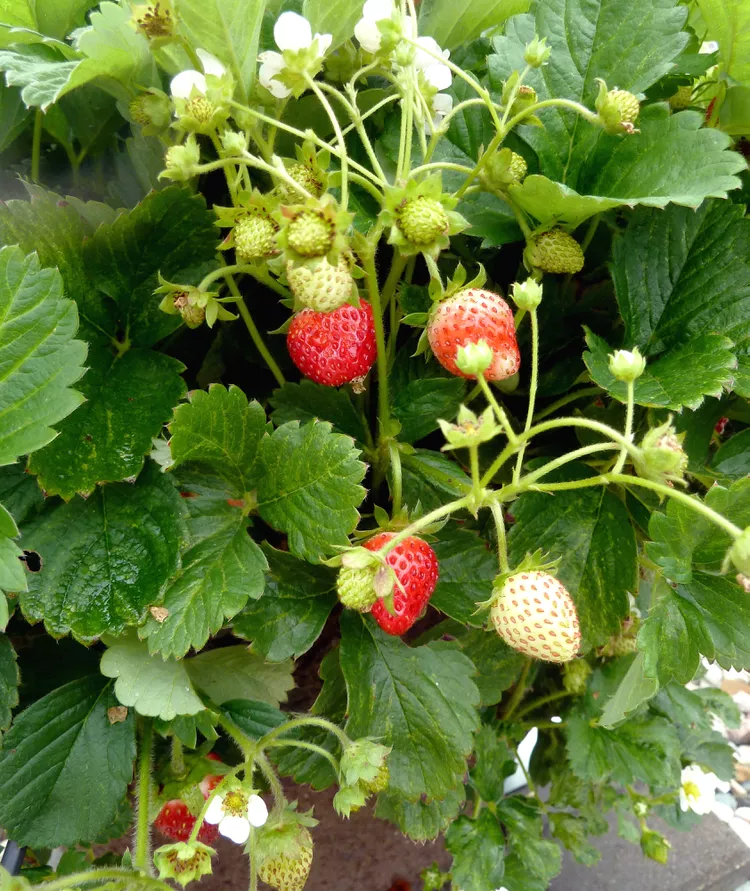
Most gardeners grow strawberries in outdoor beds and harvest fresh berries in summer. However, with a bit of know-how and the right gardening supplies, you can master the art of growing strawberries indoors and gather ripe and juicy strawberries from your plants in any season. Whether you want to grow strawberries in pots on a sunny windowsill or in a small backyard greenhouse, this guide explains how to grow strawberries indoors in a small space.
How to Grow Strawberries Indoors
Growing strawberries indoors has a lot going for it. The plants don’t take up much space and are suitable for urban gardening. Strawberries are also non-toxic to cats and dogs, and the indoor plants are much less prone to pests that often attack outdoor strawberries. Even though indoor strawberries don’t fruit as prolifically as outdoor plants, you can still grow an ample crop of berries by following these simple tips.
1. Choose roomy pots.
Strawberry plants have a relatively short root system, so you don’t need massive pots to grow them. Containers that are about 8 inches deep by 12 inches wide provide enough space for three strawberry plants, or you can keep a single plant in a 6- or 8-inch container. Terracotta pots, hanging planters, and hydroponic countertop setups can all be used for growing strawberries as long as the growing containers have drainage holes at the bottom.
2. Select the right strawberry varieties.
Technically, all types of strawberries can be grown indoors, but day-neutral strawberry plants, like ‘Albion’ and ‘Florida Beauty,’ are usually the best choices for indoor gardens. Other strawberry varieties flower and fruit according to day length, producing the majority of their harvest during the long days of summer. However, day-neutral strawberries bear fruit regardless of day length, and they can keep fruiting as long as they receive plenty of light and water and the temperature remains between 40°F and 90°F.
3. Use a rich potting mix.
You can plant indoor strawberries any time of the year. They grow best if you plant them so that their crowns are at the soil line and not covered with soil. When growing strawberries indoors, select a quality potting mix that drains well and is rich with nutrients. To give your plants an extra boost, mix a handful of compost or worm castings into the potting mix before you plant.
4. Provide lots of light.
One of the trickiest parts of keeping strawberries indoors is ensuring that your plants get enough light throughout the year. Sunny, south-facing windows that receive at least 6 to 8 hours of bright light daily provide the best environment for indoor berry plants; however, grow lights left on for 12 to 16 hours a day are also suitable. Remember to rotate your plants regularly to keep them from stretching unevenly toward the light.
5. Add slow-release fertilizer.
Mixing worm castings or compost into the potting mix provides a slow release of nutrients to strawberry plants as they grow. You can boost the growth of indoor strawberries even further by adding slow-release fertilizer to the potting mix. Follow up with an organic, liquid fertilizer monthly during the growing season. Increase the application rate, fertilizing plants once every two weeks after strawberry flowers appear.
6. Water regularly.
Like other edible plants, strawberries need water regularly. Indoor strawberries typically need less water than outdoor plants, but they should be watered at least once a week or when the top 1 inch of soil feels dry. Morning or early afternoon are the best times to water strawberries. It’s best to water the plants from the bottom so their leaves don’t get wet.
7. Hand-pollinate flowers.
Bees and insects typically pollinate outdoor strawberries, but indoor plants must be hand-pollinated to set fruit. Pollinate strawberries by gently brushing a cotton swab or small paint brush over the plant’s flowers. Hand-pollinate strawberries every few days during the growing season to ensure pollen reaches every flower that blooms.
8. Be patient.
Indoor strawberry plants grow quickly after they’re established, but the plants take longer to produce berries. Nursery starts and bare-root strawberries begin fruiting about 2 to 3 months after planting, but plants grown from runners or seeds usually don’t fruit until their second year. After the plants are mature, harvest the strawberries when they’re fully ripe and red and use them frozen, dehydrated, or fresh in strawberry shortcake and other delicious strawberry recipes.