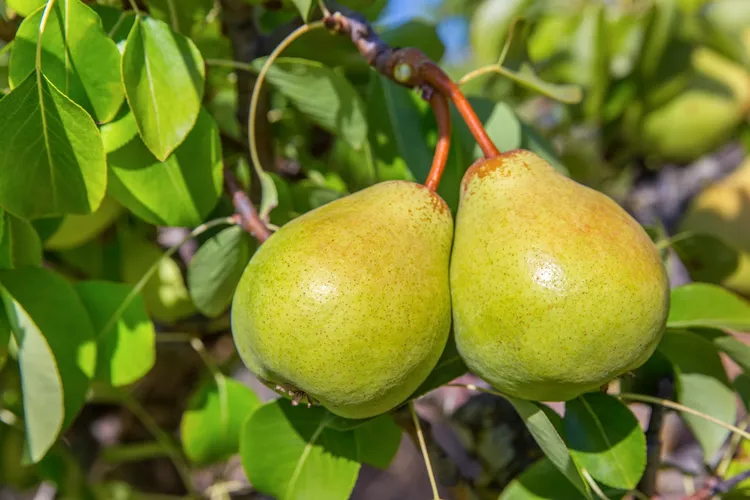
Pruning pear trees is an essential annual task to maintain their shape and prevent overgrown limbs. Pruning boosts harvest yields by encouraging more branching and fruiting. It also improves airflow and reduces common plant diseases like rust and blight. All varieties of pear trees benefit from pruning, but some trees need to be pruned more thoroughly than others. For example, if you keep an espalier pear tree or a pear tree in a pot, you probably need to prune your plants more vigorously to maintain their tidy forms. The pruning tips listed here can be applied to all pear trees, regardless of whether you keep a single tree or a mini orchard.
1. Choose the right tools.
Pruning tools are essential if you have a backyard orchard, and you may need to invest in several different pruning tools depending on the size of your pear trees. Hand pruners are ideal for clipping away small tree branches, while loppers are the best choice for thicker branches with a diameter of around 1 inch. For larger branches measuring 3 inches in diameter or more, hand saws are the best tool for the job. Make sure any pruning tools you use are sharp and thoroughly sterilized to prevent the spread of plant diseases.
2. Prune at the right time.
Remove diseased or damaged branches from pear trees as soon as you spot them, but otherwise, it’s best to wait until late winter or early spring to prune your trees. At this time of the year, pear trees are dormant, and pruning cuts heal quicker and are less prone to diseases. Pear trees pruned in autumn might leaf out before frost and be susceptible to winter damage.
3. Start with a young pear tree.
If you want pear trees with strong lines and well-proportioned branches, you need to start pruning the plants when they’re young. Young trees should be pruned lightly during their first one to three years to shape them into a pyramidal form with a single main central stem or leader. Also, inspect new trees for branches that are growing too closely together and clip away any stems that are less than 18 inches above the soil line.
4. Go slow.
It’s much easier to shape pear trees little by little than to refresh overgrown pear trees with massive branches. However, if you haven’t pruned your pear trees for a few years or inherited old trees that need some TLC, you can often rejuvenate these plants with slow, deliberate pruning cuts. Pruning away too many branches at once can stress out your trees, but you can clip away about 20% to 30% of pear branches at once to clean up the lines of old trees.
5. Remove dead, damaged, and diseased branches anytime.
Protect the health of your pear trees by cutting off any dead, damaged, or diseased branches. Remove branches affected by these problems as soon as you see them, rather than waiting for a specific time of year. Damaged branches are relatively easy to spot, while dead branches are usually leafless and feel brittle. Diseased branches might exhibit unusual bark colors or fungal growth.
6. Clip off suckers.
Pear trees can produce small stems known as watersprouts or suckers around the base of their trunks. When these weak stems aren’t removed, they redirect energy away from fruit development and cause pear trees to produce less fruit. Suckers are easy to clip off with sharp pruners.
7. Cut away irregular growth.
Each pear tree has a unique growth habit, and pruning styles can vary between trees, but there are a few types of branches that most pear growers recommend removing. Aside from suckers and damaged branches, it’s also a good idea to prune off any branches that grow straight up or down, as well as branches that turn inward toward the tree’s trunk. These branches are less capable of supporting heavy pear fruit and are more likely to rub against each other and cause damage to other branches.
8. Thin out fruiting buds.
While every gardener wants to grow the largest harvest of pears possible, leaving too many fruit buds on trees can hinder fruit development and cause the pears that grow to be less sweet. For this reason, many gardeners thin out pear tree fruit buds so that the remaining buds are spaced about 4 to 6 inches apart. You may also want to thin out whorled stems, where three or more stems sprout from the same spot on a larger branch.
9. Refresh old growth.
Pear branches that are about two to three years old tend to produce the most fruit, while older and larger branches can cast excessive shade and cause pears not to be as sweet. To avoid this, many growers remove one or two of the largest branches on pear trees yearly, giving smaller branches more room to grow. Clipping all of the remaining branches back by 10% to 20% can also refresh pear tree growth and cause trees to produce more branches and fruit. Make your pruning cuts above outward-facing buds and at a slight angle so water doesn’t pool on the cut part of the stems.
10. Aim for a wine glass shape.
Pruning pear trees opens up the center of the plant and allows for more air flow through the branches, which can prevent plant diseases like canker, fire blight, and pear rust. If you want that classic pear tree shape, take a step back from the tree as you’re pruning and observe the overall outline of the tree. From a distance, plan your pruning cuts, keeping in mind that pear trees with a slightly pyramidal or wine glass shape are easier to harvest from and look more aesthetically pleasing.
New