
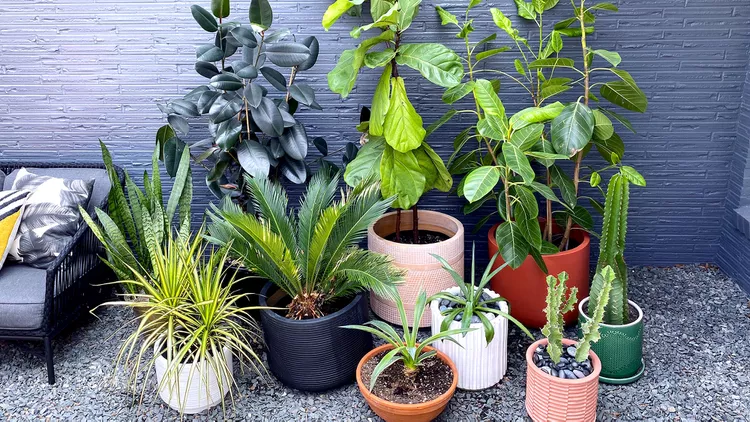
Potted plant gardeners have probably heard that putting rocks in the bottoms of planters can improve soil drainage and prevent root rot. But despite the pervasive advice to use gravel, pebbles, pottery shards, and other coarse materials in plant containers, studies have proven that this practice does not improve drainage. The method is not only ineffective at providing drainage for potted plants—that coarse layer actually exacerbates soggy soil conditions, the very opposite of popular belief.
Why Rocks Don't Work as Drainage for Potted Plants
In theory, adding rocks to containers to facilitate drainage for potted plants seems to make sense. If you’ve ever watched rainwater puddling outdoors, you know water runs through gravel quickly but often pools in soil and becomes mud. When applied to potted plants, it’s logical to think that water would move faster through more porous materials, like gravel—but this doesn’t happen if the water first has to percolate through a layer of soil. Water doesn’t move easily between more than one material. In the case of a potted plant with a finely textured potting mix atop a gravel layer, water moves through the potting mix just fine but stops when it encounters the layer of gravel.
To understand why this occurs, imagine placing a porous sponge on top of some gravel. If you pour water on top of that sponge, the dry sponge will absorb the water and expand upwards against gravity. Only after the sponge is completely saturated and can’t absorb more water will it allow water to trickle into the gravel beneath it.
In potted plants, potting mix acts like a dry sponge. It pulls water upwards against gravity, causing water to linger just above the gravel line in what is known as a perched water table. The potting mix will only release water to the gravel beneath it when it is so waterlogged that it can’t absorb any more moisture. Therefore, when you add gravel or other coarse materials to the base of your pots, water lingers around plant roots instead of draining, which increases the likelihood of root rot developing.
How to Improve Soil Drainage for Potted Plants
Although placing rocks at the bottom of plant containers won’t improve drainage, there are other ways to ensure your plants don’t sit in soggy soil.
Choose the Right Pots
A pot with adequate drainage holes is essential for growing healthy plants. You can fashion holes in containers without drainage openings with an electric drill and a masonry bit. Cover the drainage ports with a paper coffee filter or screen mesh if you’re concerned about soil slipping out of the holes and making a mess.
Amend Your Potting Mix
Potting mixes usually contain ingredients like coarse sand, vermiculite, and perlite, which help facilitate drainage for potted plants. However, if you’d like to boost the drainage potential of bagged soils, you can mix more of these amendments into your potting mix. Adding extra compost to potting mixes will also improve drainage.
Repot Your Plants
Over time, potting mixes become compacted, which slows water drainage. If your pots aren’t draining well, it may be time to repot your plants.
Good Ways to Use Rocks with Potted Plants
While gravel, pebbles, and rocks won’t do much to promote drainage for potted plants, there are a few other ways to put rocks to use for your houseplants or container garden.
Make a Pebble Tray
Tropical houseplants often struggle indoors due to low humidity levels, but if you have some rocks on hand, you can make a simple pebble tray to boost humidity. Add pebbles to a flat tray or plate then pour some water into the tray so the water level is just below the top of the rocks. Place a plant pot on top of the pebble tray—the water in the tray will add moisture to the air around your plant as it evaporates.
Keep Critters Out of Your Potted Plants
Cats, squirrels, and other animals can make a nuisance of themselves by digging in potted plants. Keep these creatures out of your plants by adding a layer of pebbles on top of your potting soil. The rocks will make it more difficult to paw through the soil and the animals will go elsewhere to dig.