
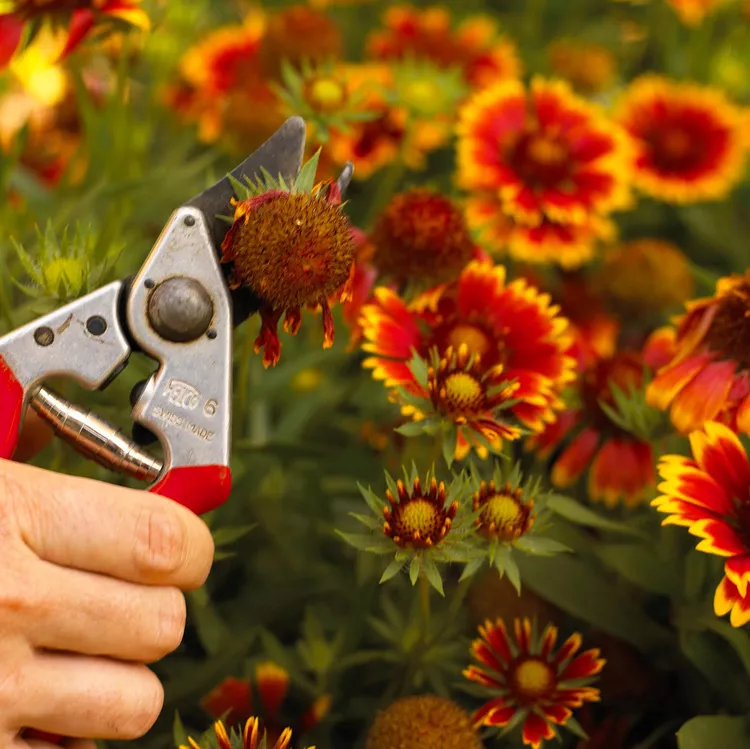
Let's face it: Even the name of this task sounds scary. But deadheading isn't as morbid as it sounds; it just means trimming off spent blooms from your plants. Once you know how to deadhead flowers, you can keep your garden tidy and encourage your plants to continue making new flowers instead of spending energy producing seeds.
Some gardeners get a little nervous about snipping parts off their plants, but unless you start carelessly whacking away, it's tough to damage or kill a plant just by clipping spent flowers. So when your plants have fading blooms or look unattractive, you can pull out your garden shears and start deadheading flowers.
Which Plants to Deadhead?
You can often get a clue about which plants to deadhead and which to leave alone just by watching them. If the flowers stay on the plant and become brown and unattractive, feel free to start trimming spent flowers to clean up the mess.
Deadhead spring blooming perennials at the right time, and you may get a second bloom during the season. When cutting them back in the fall for the winter season, leave a few branches for wildlife to use for protection, but be sure to remove all of the dead branches to reduce the risk of diseases. Deadhead annuals whenever you see wilted or dying flowers to encourage new blooms.
How to Deadhead Flowers with Many Small Blooms
These include Coreopsis, feverfew, golden marguerites, Lobelia, sweet alyssum, smaller mums, Potentilla, flax, Aster, Gaillardia, and Ageratum. Trimming one flower at a time would be too time-consuming, so instead, use grass shears to tackle the task in sections. When deadheading flowers on these plants, get as much of the flower stalk as possible. Avoid buds, but don't worry about taking a little foliage off with the spent flowers; it'll grow back.
How to Deadhead Shrubby Plants with Large Flowers
These include large marigolds, summer phlox, Astilbe, peonies, purple coneflowers, black-eyed Susans, daisies, annual and perennial Salvia, petunias, and zinnias. With clean and sharp pruning shears, also known as secateurs or pruning snips, the key to deadheading flowers is to cut off each spent bloom individually, getting enough of the stalk so it doesn't stick out awkwardly. It's OK (and in the case of leggy plants, such as petunias, desirable) to take off a bit of the foliage, too.
How to Deadhead Flowers on Rose Bushes
Not to be confused with pruning, deadheading roses means taking out only the minimum amount of stem to remove the spent flower. Cut at a 45-degree angle, sloping down toward the center of the rosebush. You should cut on a spot after the first pair of leaves and directly above an outward-facing stem (a stem that points away from the plant's center).
How to Deadhead Long-Stem Flowers on Tall Stalks
These include daylilies, larkspur, foxgloves, hostas, tulips, daffodils, Oriental poppies, peonies, and irises. Cut back each spent flower with hand pruning shears as close as possible to where the stalk meets the leaves.
Flowers That Don't Need Deadheading
Though many plants will benefit from deadheading, not all need it to bloom. You can also find self-cleaning varieties of some plants that traditionally need deadheading; the spent flowers will naturally fall off, and the plant will produce more flowers without any trimming from you.
- Grasses
- Sedum 'Autumn Joy'
- Melampodium
- Impatiens
- Most flowering vines
- Most groundcovers
- Crocuses and other "minor" spring-blooming bulbs
- Wishbone flower (Torenia)
Other Ways to Extend Blooms
Deadheading is just one way to extend the bloom season; there are other tricks for keeping the color.
- Set potted annuals in the garden and move them around to areas that need an instant color lift.
- Plant late-summer and autumn-flowering bulbs in early to midsummer for lovely late-season bloomers.
- Water deeply every three to four days while young plants establish themselves then cut back to weekly watering. Later in the season, water as needed when the soil is dry.
- Feed perennials monthly (spring through summer) with a fertilizer low in nitrogen but high in phosphorus. Feed annuals every three weeks with a balanced (5-10-5) organic fertilizer.
- Weed out unwanted plants so flowers won't have to compete for nutrients.
- Propagate existing plants by dividing them or collecting seeds from one or two faded blooms you don't deadhead; the more, the merrier!